
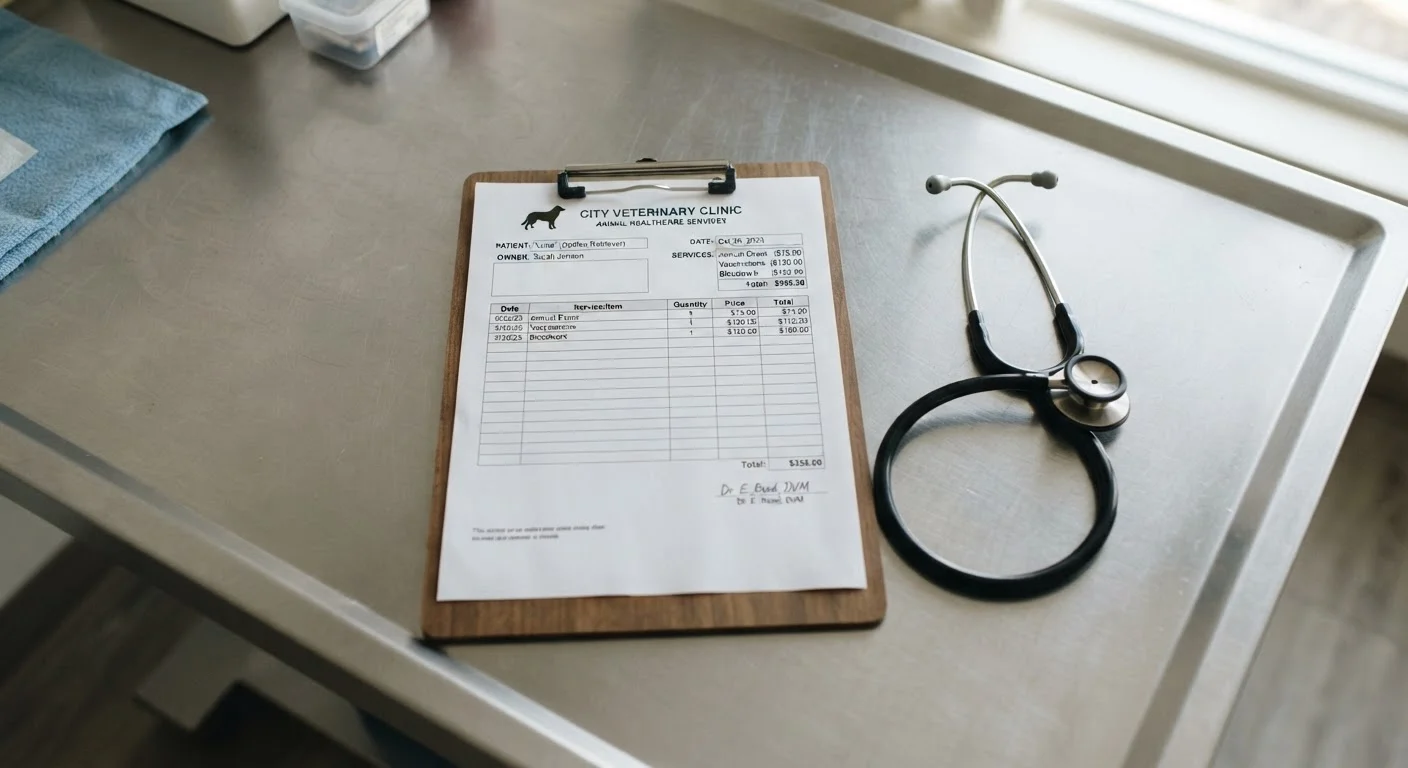
The Core Line Items on Most Vet Bills
A vet invoice can look confusing at first glance, but it usually follows a predictable structure. Most bills include some combination of these categories:
- Exam fee: The base charge for the veterinarian's hands-on assessment. This applies even if no additional services are performed.
- Diagnostics: Lab work (blood panels, urinalysis, fecal tests), imaging (X-rays, ultrasound), or cultures. Each test is billed individually.
- Medications: Prescriptions, flea/tick preventives, or vaccines dispensed during the visit. Prices vary by drug and dose.
- Procedures: Anything from wound cleaning to dental scaling to surgical intervention — each with its own fee.
- Supplies and consumables: Bandages, IV fluids, anesthesia supplies, and similar materials used during care.
- Hospitalization or monitoring: If your pet stays overnight or requires supervised recovery, daily boarding and monitoring fees apply.
If you're preparing for your pet's first vet visit, knowing these categories in advance makes the invoice far less surprising.
$300–$500
Typical routine annual care cost per dog
The American Pet Products Association estimates basic annual care — exams, vaccines, flea prevention — for a dog ranges broadly by region and practice type.
3x
Emergency visit premium over routine care
Emergency and specialty clinics commonly charge two to three times the fees of general practices due to higher staffing, equipment, and 24-hour operational costs.
67%
U.S. households that own a pet
According to the American Pet Products Association's National Pet Owners Survey, roughly two-thirds of American households include at least one pet.
Why Prices Differ Between Practices and Regions
Two clinics in different zip codes can charge very different amounts for the same vaccine — and both can be pricing fairly. Several legitimate factors drive this variation:
- Geography: Urban areas with higher rents and wages tend to have higher fee schedules across the board.
- Practice type: A general practice, a specialty referral center, and a 24-hour emergency hospital all have different cost structures. Emergency and specialty care is almost always more expensive.
- Equipment investment: A clinic that owns an in-house ultrasound or digital radiography suite has amortized that cost into its fees. The upside is faster results; the tradeoff is higher per-visit charges.
- Staff credentials: Board-certified veterinary specialists command higher fees than general practitioners, reflecting additional years of residency training.
- Practice overhead: Staff salaries, malpractice coverage, sterilization equipment, and continuing education all feed into what a clinic needs to charge to operate sustainably.
Understanding that vet bills behave like variable household expenses — unpredictable in timing and amount — can help families plan more realistically for pet ownership costs.
Always Ask for a Written Estimate First
Before authorizing any non-emergency procedure or diagnostic, ask the front desk or technician for a written estimate. This is standard practice at most clinics and gives you a chance to prioritize services if cost is a concern. It also protects both you and the practice from miscommunication about scope of care.
How to Read and Question Your Invoice
You have every right to understand what you're paying for. Here's how to engage with your vet's team confidently:
- Request an estimate before any non-emergency work begins. Most practices will provide one. Review it line by line and ask what each item is for.
- Ask about urgency. Some diagnostics can be deferred to a follow-up visit; others are time-sensitive. Your vet can tell you which is which.
- Understand the difference between required and recommended. A rabies vaccine may be legally required in your state; a specific supplement may simply be suggested. These are different categories.
- Clarify medication sourcing. In some cases, a prescription written by your vet can be filled at a human pharmacy, which may reduce cost. Ask whether that's an option.
- Review the final invoice before paying. Billing errors happen. Confirm that what you were charged matches what was actually performed.
If your pet showed concerning symptoms that prompted the visit, recognizing pain signals early often leads to simpler, less costly interventions than waiting until a condition worsens.
Low-Cost Clinics Serve a Legitimate Role
Community clinics, humane society vaccination events, and veterinary school teaching hospitals often offer lower-cost services. These are not inferior options — they simply operate with different overhead models or subsidy structures. Ask your local shelter or humane society if they're aware of resources in your area.
This article is for general informational purposes only and is not a substitute for professional veterinary or financial advice. Always consult a licensed veterinarian for guidance specific to your pet's health needs.