
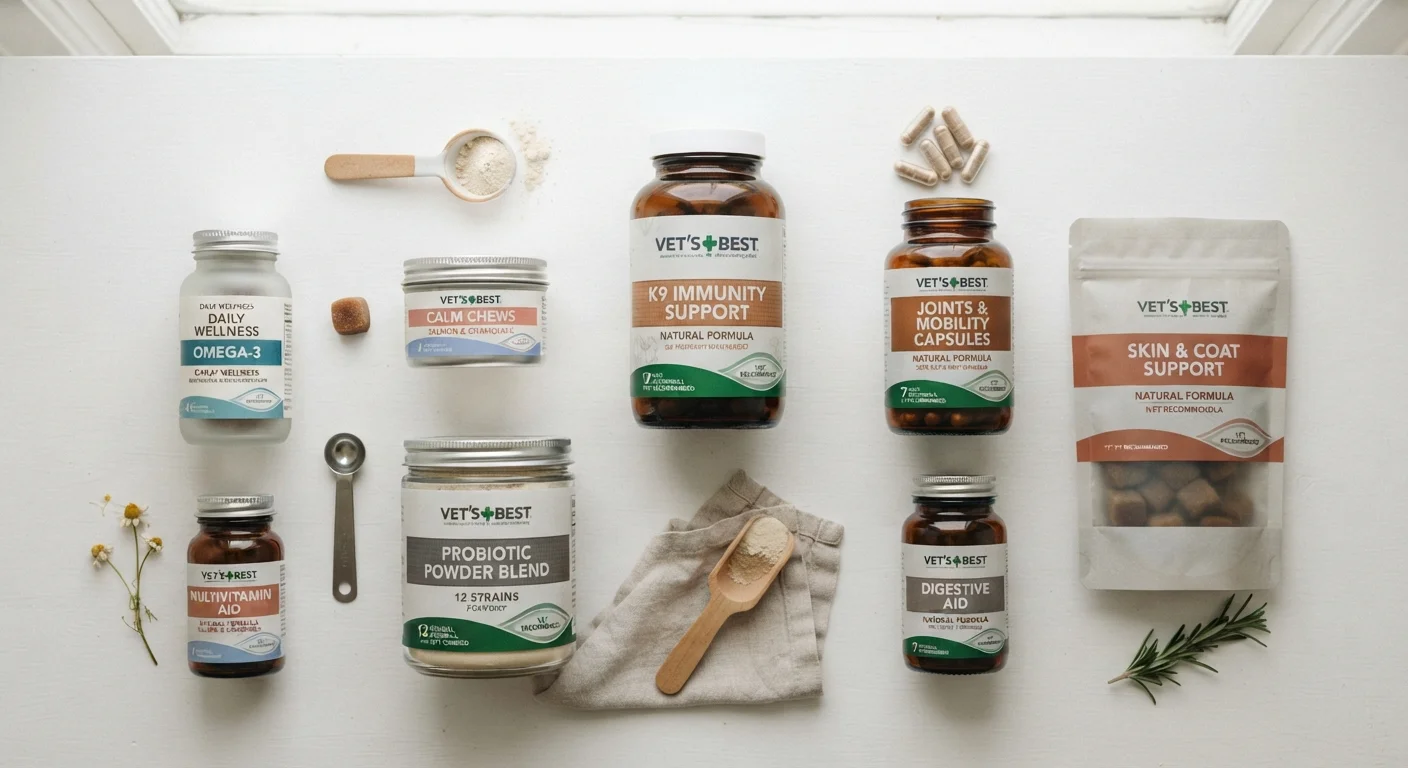
Why Pet Supplement Claims Are So Easy to Believe
Pet supplement sales generate billions of dollars annually in the United States, and it's easy to understand why. Pet owners love their animals and want to do everything possible to keep them comfortable and healthy. Supplement labels tap directly into that instinct — promising shinier coats, calmer nerves, healthier joints, and better digestion.
What many families don't realize is that pet supplements occupy a regulatory gray zone. Unlike veterinary drugs, dietary supplements for pets are not required to demonstrate safety or efficacy before reaching store shelves. The U.S. Food and Drug Administration (FDA) does monitor the supplement market, but the burden of proof is lower than for pharmaceuticals. That gap between what a label claims and what science supports can be wide — and expensive to cross.
Understanding how to read those claims critically is a skill every pet owner deserves. If you're already working on reading labels, our guide on what pet food labels actually mean covers the broader context of how marketing language works on pet packaging.
Treating structure/function claims as proven medical benefits.
Why it happens: Phrases like "supports hip and joint health" sound clinical and authoritative. Many owners assume they reflect tested outcomes.
Assuming "natural" means safe or side-effect-free.
Why it happens: "Natural" carries a strong positive connotation, and many owners equate natural origin with harmlessness.
Supplementing without a confirmed deficiency or diagnosis.
Why it happens: Proactive supplementation feels responsible, and marketing often implies it's a low-risk upgrade to routine care.
Conflating human or rodent research with evidence for your pet.
Why it happens: Supplement marketing often cites studies — but those studies may involve a different species, a drug-grade dose, or an unrelated condition.
Ignoring the possibility of supplement–medication interactions.
Why it happens: Supplements feel separate from "real" medicine, so owners often don't think to mention them to their vet.
Red Flags to Watch for Before You Buy
Once you know the common mistakes pet owners make with supplement claims, a few practical filters can sharpen your judgment fast.
$700M+
Estimated annual U.S. pet supplement market
Industry research has placed the U.S. pet supplement market well above $700 million, with consistent year-over-year growth driven by humanization trends in pet ownership.
~60%
Pet owners who give supplements without a vet recommendation
Surveys of U.S. pet owners have consistently found that a majority of those using supplements did not receive a veterinary recommendation before starting.
Ask for the evidence tier. Anecdotal testimonials — even from real pet owners — sit at the bottom of the evidence hierarchy. Peer-reviewed studies on the specific species, dose, and condition carry far more weight. If the only support listed is customer reviews or a vague citation, treat the claim with appropriate skepticism.
Watch for proprietary blends that hide dosages. When a label lists multiple ingredients under a single "blend" without individual quantities, there's no way to assess whether any ingredient is present in a meaningful amount. Transparency in dosing is a reasonable expectation.
Consider whether your pet actually has a gap to fill. Pets eating a complete and balanced diet — look for that phrase on food labels, as explained in our guide to reading pet food labels — may not benefit from additional supplementation at all. Most healthy adult pets don't have nutritional deficiencies that over-the-counter supplements can address.
Senior pets are a partial exception. As animals age, some nutritional needs do shift, and certain joint or cognitive supplements have more supporting research than others. See our overview of how health needs shift in senior pets for context.
Some Supplements Can Cause Real Harm
Fat-soluble vitamins like A, D, E, and K can accumulate to toxic levels if over-supplemented. Certain herbal ingredients are dangerous for specific species — xylitol, for example, is found in some human-grade supplements and is highly toxic to dogs. Never assume a supplement designed for humans is appropriate to share with a pet, and always verify species suitability with your vet.
When in doubt, a conversation with your veterinarian is the single most reliable step. That's not a cliché — it's the most direct way to match a specific supplement to a specific, confirmed need in your specific animal. For a broader look at what genuinely moves the needle on long-term pet health, see the habits that make the biggest difference.
This article is for general informational and educational purposes only and is not veterinary advice. Always consult a licensed veterinarian before adding any supplement to your pet's diet.