
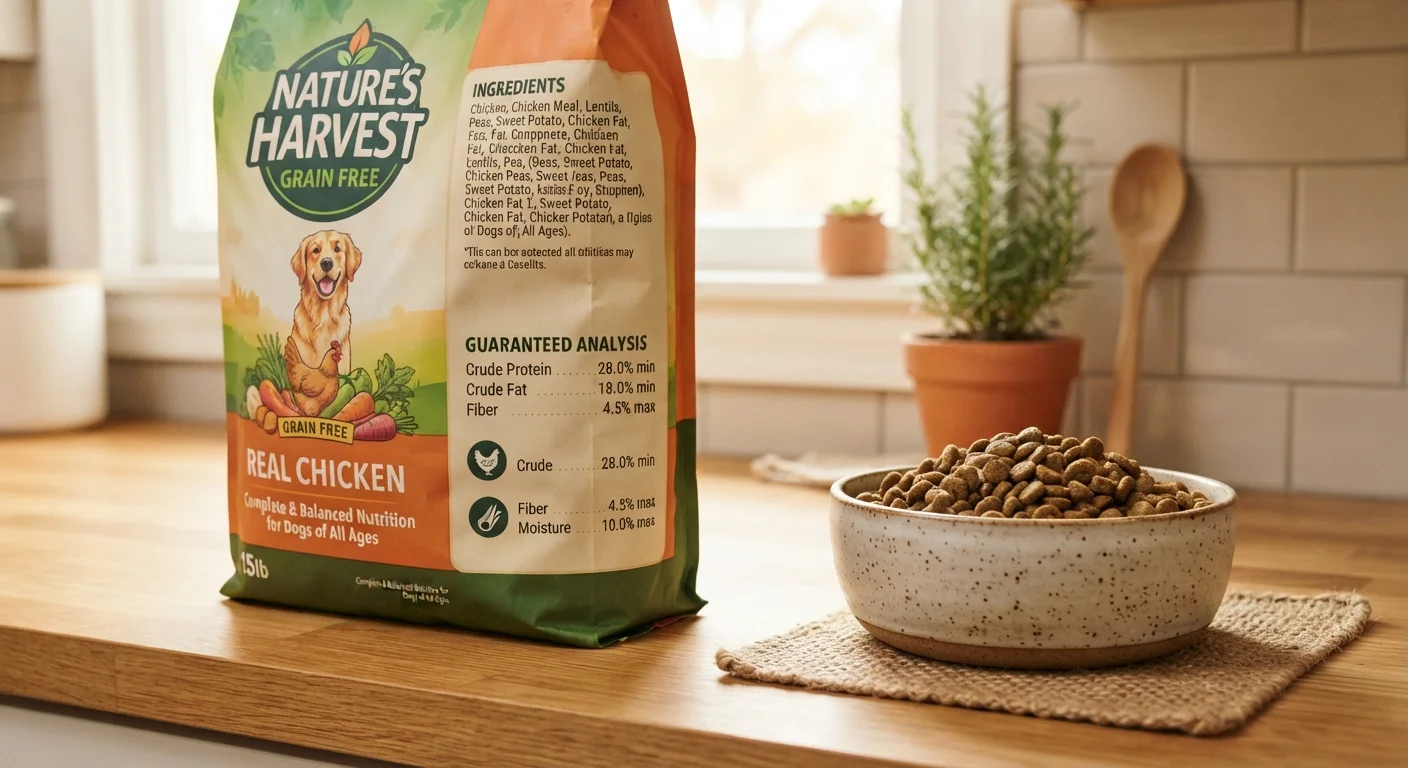
The Regulated Parts of Every Pet Food Label
Every bag, can, or pouch of pet food sold in the U.S. must carry specific mandatory information. Understanding which sections are regulated — and by whom — helps you separate reliable facts from marketing copy.
The product name is more informative than it looks. AAFCO rules govern what percentage of an ingredient must be present for it to appear in the name. If a food is called "Salmon Cat Food," salmon must make up at least 95% of the total ingredients (excluding water). Add a word like "dinner" or "entrée," and that drops to 25%. The word "with" — as in "with salmon" — only requires 3%. Those small word choices represent big differences in actual content.
The nutritional adequacy statement is one of the most important lines on the label. It tells you whether the food is "complete and balanced" for a particular life stage and how that claim was established — either through formulation to meet AAFCO nutrient profiles, or through an actual animal feeding trial. Both are valid methods, but a feeding trial is considered more direct evidence of real-world performance.
For a closer look at how the numbers in the guaranteed analysis section actually work, see our guide on reading a guaranteed analysis panel.
AAFCO Sets the Standards, States Enforce Them
AAFCO doesn't directly regulate pet food — it publishes model regulations that individual states choose to adopt. Most states follow AAFCO's guidelines closely, but technical enforcement varies. The FDA also oversees pet food safety, particularly regarding contaminants and adulteration.
How the Ingredient List Works
Ingredients are listed in descending order by pre-processing weight. This detail matters more than most shoppers realize. Fresh chicken contains roughly 70–80% water. Once cooked and dried, it shrinks considerably. A "chicken meal" listed lower may actually contribute more protein by dry weight than fresh chicken listed first.
This doesn't mean fresh ingredients are inferior — it means you can't judge a food's protein quality or quantity by the first ingredient alone. For a plain-language breakdown of terms like "chicken meal," "chicken by-product," and "chicken digest," see our protein sources guide.
Ingredients can also be split — a manufacturer might list "ground corn," "corn gluten meal," and "corn bran" separately, which places each lower on the list than if they were combined. This is legal and common. It doesn't automatically indicate poor quality, but it's worth knowing the practice exists.
Look Past the First Ingredient
Instead of focusing solely on what's listed first, scan the first five to seven ingredients as a group. Together, they make up the bulk of the food. Also check whether the nutritional adequacy statement confirms the food is complete and balanced — that single line does more work than the entire front panel.
Marketing Claims vs. Regulated Terms
The front of the bag is prime advertising space. Words like premium, holistic, ancestral, and gourmet have no legal definition under AAFCO or FDA rules. They communicate a brand's positioning, not a nutritional standard.
Some terms do carry regulatory weight, though with varying strength. "Natural" has an AAFCO definition — it generally excludes chemically synthesized ingredients — but it doesn't imply organic sourcing or superior nutrition. "Organic" follows USDA rules similar to those for human food. "Human-grade" is largely unregulated in pet food contexts. Learn which of these terms has real regulatory backing before giving them much weight in your purchase decision.
Grain-free is another claim worth scrutinizing. It describes what a food lacks, not what makes it nutritionally superior. Our grain-free explainer walks through what current research actually says about grains and pet health.
95%
Ingredient threshold for single-ingredient product name
Under AAFCO guidelines, a pet food named after one ingredient (e.g., 'Salmon Cat Food') must contain at least 95% of that ingredient, excluding added water.
3%
Minimum required when 'with' appears in the name
A label reading 'with chicken' only requires 3% chicken content under AAFCO naming rules — a significant contrast to a product called 'Chicken Dog Food.'
2
Official AAFCO life-stage categories
AAFCO recognizes growth/reproduction and adult maintenance as the two nutritional life-stage categories for pet food formulation in the United States.
Life-Stage Labels and Why They Matter
AAFCO recognizes two official life-stage categories: growth and reproduction (for puppies, kittens, and pregnant or nursing animals) and adult maintenance. A food labeled "for all life stages" must meet the higher growth-and-reproduction nutrient requirements.
Feeding an adult cat a food designed for kittens isn't necessarily harmful in the short term, but over time, the nutrient imbalance can add up. Conversely, some large-breed puppies need foods specifically formulated to support slower, steadier skeletal development. If your pet has specific health considerations — weight management, kidney function, joint health — your veterinarian can guide you toward a food whose label actually matches those needs. Understanding your pet's weight and body condition is a useful companion to evaluating life-stage nutrition.
This article provides general educational information about pet food labeling and is not a substitute for personalized veterinary advice. Consult your veterinarian before making significant changes to your pet's diet.