
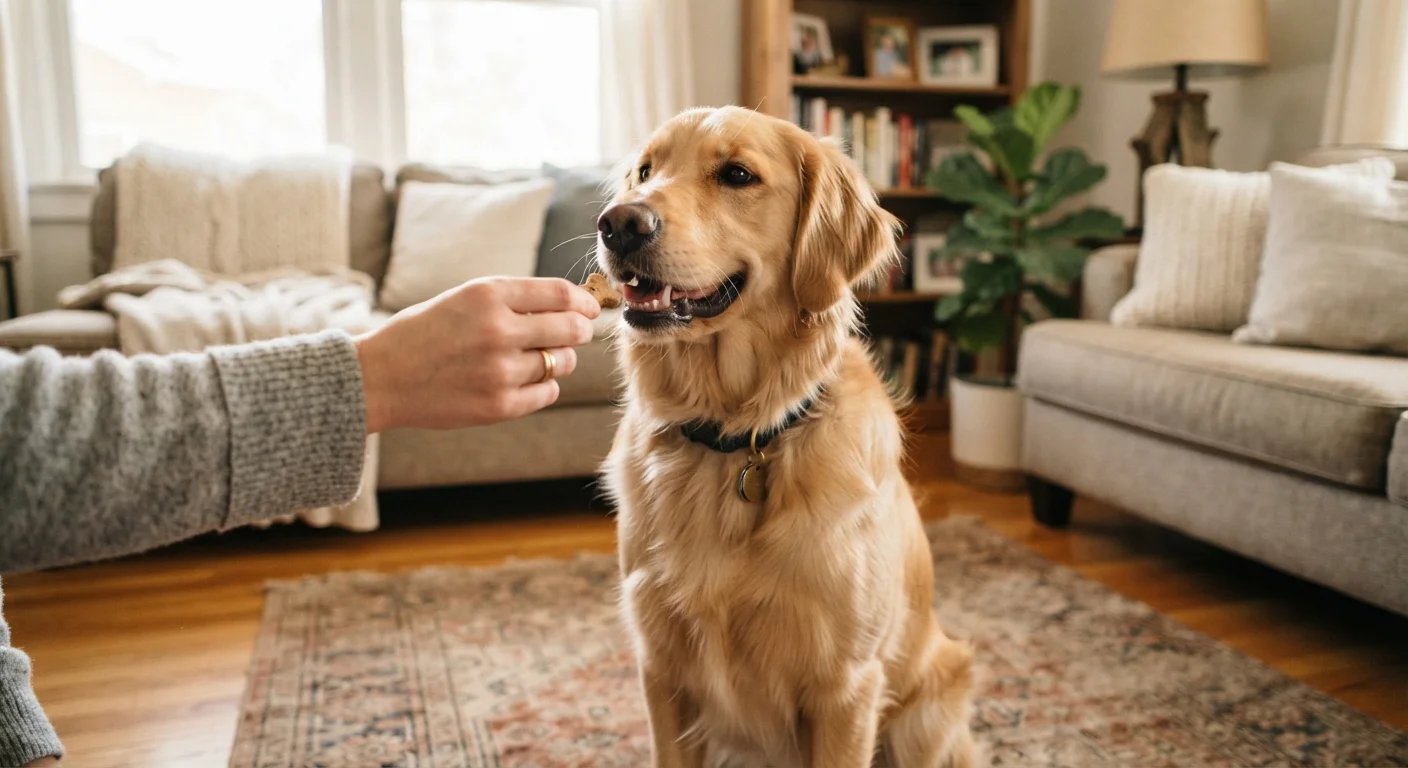
More Than Treats: The Real Meaning
When families hear "positive reinforcement," the mental image is often a dog eagerly sitting for a biscuit. That picture isn't wrong — but it's incomplete. Positive reinforcement is a specific, science-backed principle: you add a rewarding consequence right after a behavior occurs, which makes that behavior more likely to repeat.
The word "positive" here isn't about attitude or cheerfulness. It's a technical term meaning you're adding something to the situation. The "reinforcement" part means the behavior strengthens over time. Together, they describe one of the most reliable tools in behavioral science — applied just as effectively in pet training as in human learning research.
What counts as a reward varies by animal. For one dog, a small piece of chicken is gold. For another, a quick game of tug is far more motivating. Some cats respond well to a gentle chin scratch; others light up for a specific toy. Identifying what truly motivates your pet is the first practical step in making this method work.
“The most powerful tool in any trainer's kit isn't a correction — it's the ability to make an animal want to repeat a behavior because doing so feels genuinely worthwhile.”
— Dr. Karen Overall, Veterinary behaviorist and author of the Clinical Behavioral Medicine for Small Animals
Why Timing Changes Everything
Positive reinforcement only works when the reward arrives within seconds of the desired behavior. Pets — especially dogs — live very much in the present moment. If you ask your dog to sit, they sit, and then you spend 10 seconds searching your pocket for a treat, you may end up rewarding whatever they did while you were searching — maybe standing back up or wandering away.
This is why many trainers use a marker — a short, sharp signal like a click from a clicker device or a verbal cue like "yes!" — the instant the behavior happens. The marker bridges the gap between the behavior and the treat arriving. Your pet learns that the marker sound means a reward is coming, so the marker itself becomes meaningful.
Use a Marker Word for Better Timing
Pick a short, consistent word like "yes!" and say it the exact moment your pet does what you asked — before you reach for a treat. Practice saying your marker word and then delivering the reward so the sequence becomes automatic. This dramatically improves timing, especially for beginners.
Practicing short, frequent sessions — five minutes, a few times a day — tends to outperform long, occasional ones. Pets learn faster when they're engaged and not fatigued, and short sessions keep motivation high.
What the Research and Experts Say
Positive reinforcement isn't a trend. Major veterinary and animal behavior organizations — including the American Veterinary Society of Animal Behavior — have published position statements supporting reward-based training methods as both effective and humane. These organizations note that training approaches relying on fear, pain, or intimidation carry real risks: increased anxiety, aggression, and damaged trust between pet and owner.
73%
Dogs trained with reward-based methods showing fewer problem behaviors
A study published in the journal Applied Animal Behaviour Science found dogs trained without punishment showed significantly lower rates of aggression and anxiety-related behaviors.
2–5 min
Optimal session length for most pet training
Animal behaviorists commonly recommend keeping training sessions brief to maintain attention and motivation, particularly for puppies and cats.
It's worth understanding that positive reinforcement doesn't mean ignoring bad behavior. It means the primary strategy shifts to building good habits through reward, rather than suppressing unwanted ones through punishment. Behaviors that don't get rewarded tend to fade on their own — a process called extinction. For a fuller picture of how reward-based and correction-based approaches compare, see our article on reward-based vs. correction-based training.
Many common training myths stem from misunderstanding this distinction. If you've heard that you need to "show your pet who's boss" or that older animals can't learn new behaviors, those ideas aren't supported by current evidence. Our piece on pet training myths unpacks some of the most persistent ones.
Putting It Into Practice at Home
Families don't need professional equipment or a trainer on speed dial to apply positive reinforcement effectively. Start with one simple behavior — "sit" is a classic entry point — and follow these basics:
- Choose a high-value reward your pet is genuinely excited about.
- Ask for the behavior once in a calm, clear voice.
- Mark the exact moment the behavior happens with a "yes!" or a click.
- Deliver the reward within two seconds.
- Repeat in short sessions, gradually asking for the behavior in new environments or with mild distractions.
Children can participate meaningfully in this process too — building responsibility and strengthening the family-pet bond. Our guide on involving kids in pet training safely covers age-appropriate roles to keep everyone confident. And if you share your home with a cat, positive reinforcement applies there as well — though with some important adaptations. See our article on training a cat at home for realistic expectations and methods.
Every Pet Has a Different Currency
What one animal finds rewarding, another may find neutral or even unpleasant. If your pet seems uninterested in training, the reward may simply not be motivating enough. Try experimenting with different treats, toys, or types of praise to find what genuinely excites your individual animal. A reward only works if the pet actually wants it.