
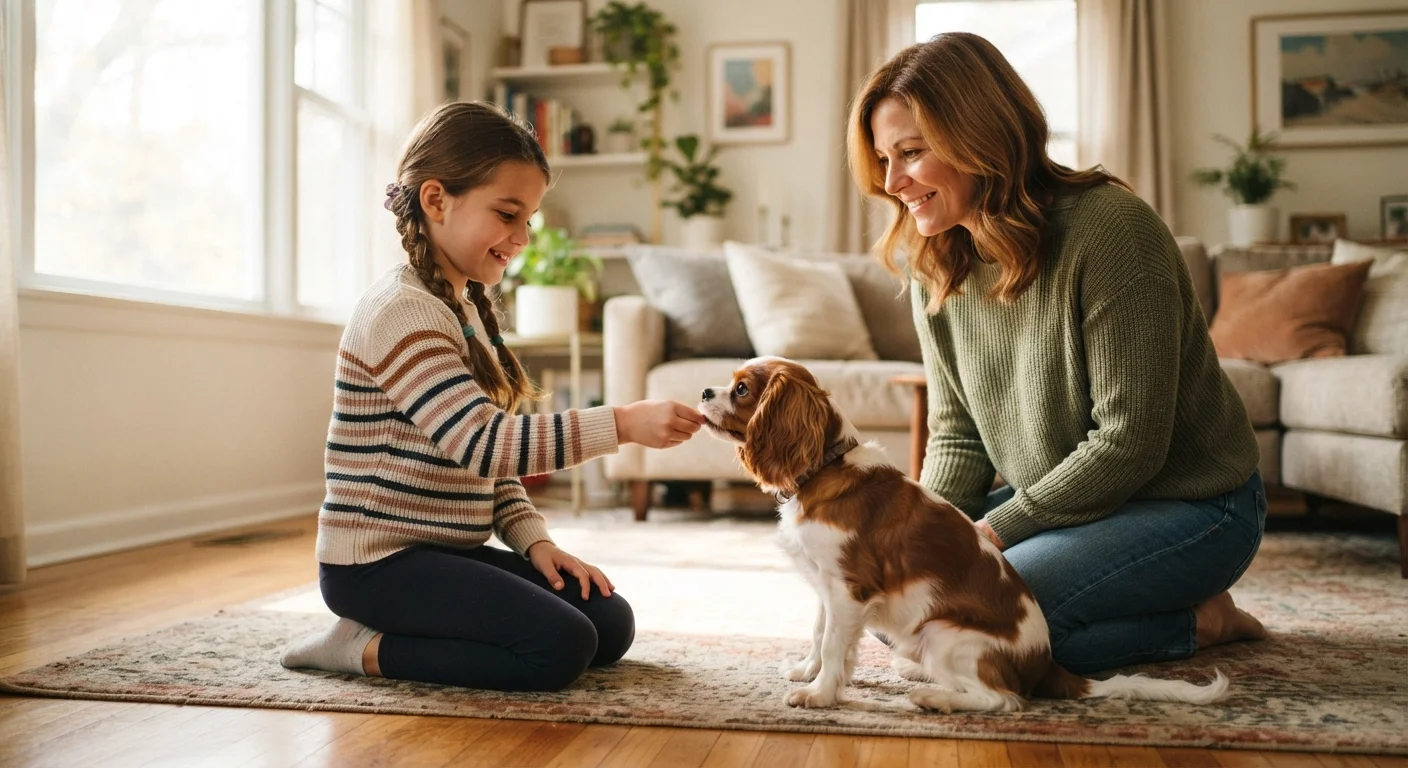
Why Involving Children in Pet Training Matters
When children take an active — but appropriately guided — role in training the family pet, the benefits run in both directions. The pet gains more consistent practice and more humans it trusts. The child develops patience, empathy, and a sense of genuine responsibility that goes beyond simply playing with an animal.
Research in child development consistently points to animal care as a meaningful context for building self-regulation and compassion. But those gains depend entirely on the experience being structured, safe, and successful. Rushed or unsupervised involvement can lead to the opposite: a child who becomes fearful of the pet, or a pet that learns to distrust or avoid small humans.
The steps below are built around positive reinforcement principles — the method most strongly supported by veterinary and animal behavior experts for family environments. No special equipment or prior training experience is required, but a few key tools make sessions run more smoothly.
What you will need
Small Soft Treats
Used as rewards during positive reinforcement; small size prevents overfeeding across a session.
Treat Pouch or Small Bowl
Keeps treats accessible for children during sessions without fumbling through pockets.
Clicker (optional marker)
Provides a precise, consistent sound marker for the moment a correct behavior occurs.
Flat-Buckle Collar or Harness
Provides safe, comfortable control if the pet needs to be gently guided or restrained.
Short Training Leash (4–6 ft)
Gives adults a safe way to manage the pet during sessions involving younger children.
Step-by-Step: How to Bring Children Into Training Sessions
Adult Supervision Is Non-Negotiable
No child of any age should lead pet training sessions without a responsible adult present. Unsupervised interactions — even with a well-trained pet — carry unpredictable risks. If a pet shows signs of stress or overstimulation, the adult should calmly end the session immediately and allow the pet time to settle.
Make Consistency Your Family's Superpower
Pets learn through repetition and predictability. When every family member uses the same cue word and hand signal for a command, the pet is far less confused and progresses much faster. Post a simple cue-word list on the fridge so everyone — including visiting grandparents — stays on the same page.
Never Use Punishment-Based Techniques
Yelling, leash-jerking, or physical corrections are never appropriate training tools — and become significantly riskier when children are involved. Punishment-based methods can provoke defensive reactions in pets, increase the chance of bites or scratches, and teach children that force is an acceptable way to manage animals. Stick to reward-based approaches throughout.
Building Long-Term Habits Around Pet Safety
Teaching a child to participate in one training session is a start — but the goal is to help them build lasting habits around respectful, confident animal interaction. A few principles are worth reinforcing over time:
- Never approach a pet during eating, sleeping, or resource-guarding. Even a well-trained pet may react defensively when startled or resource-stressed.
- Always ask an adult before attempting a new training behavior. Children naturally want to experiment, but untested cues can accidentally teach the pet something unintended.
- Celebrate the pet's progress, not just your child's performance. Framing training as a team effort — child and pet working together — builds a more durable sense of partnership.
If you have a cat rather than a dog, the dynamics shift considerably. Our guide on training a cat at home explains how feline learning works and what realistic family goals look like. For general pet health questions that arise as you train, pet health guidance is a useful starting point.
This article provides general educational information for families and is not a substitute for guidance from a certified professional animal trainer or veterinary behaviorist. If your pet shows aggression, extreme fearfulness, or unpredictable behavior, consult a qualified professional before involving children in any training activities.