
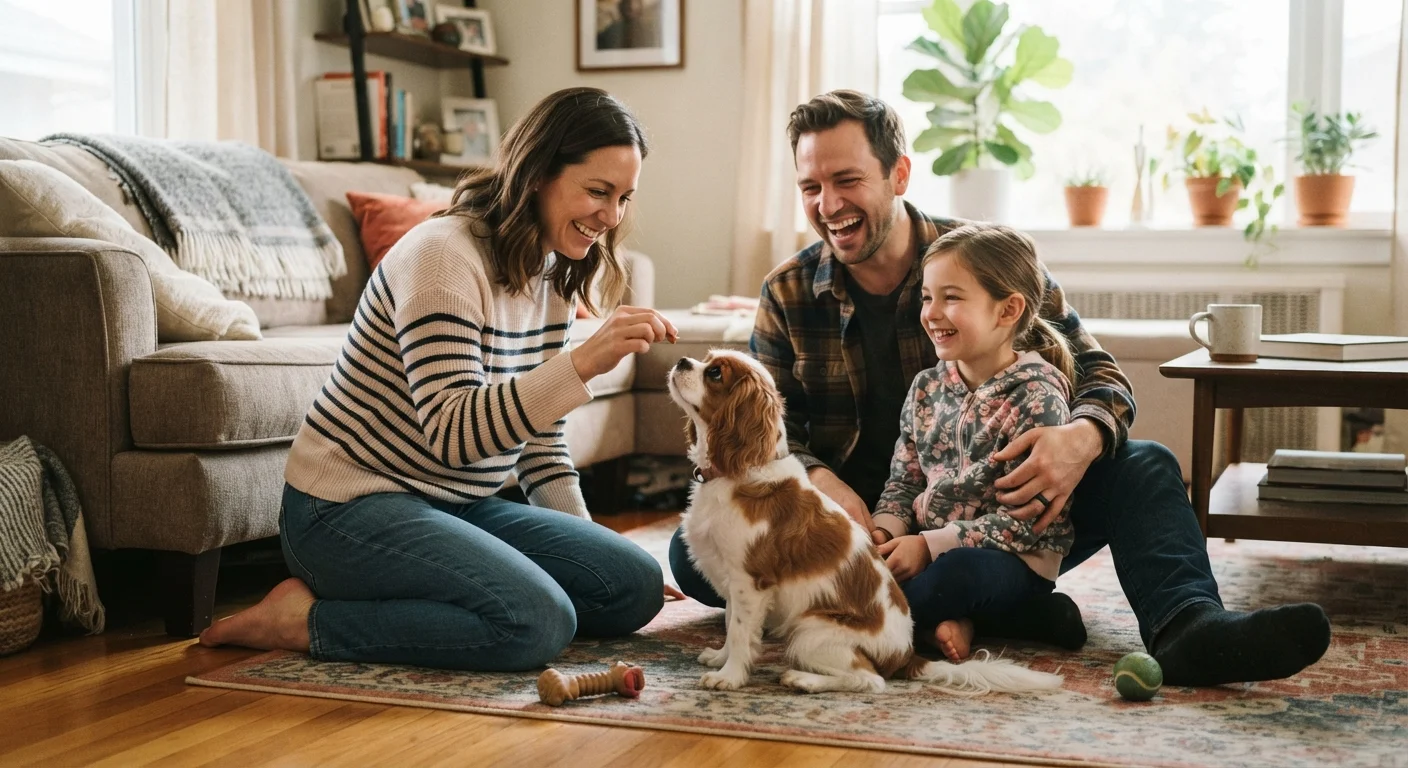
Why Session Structure Matters More Than You Think
Most families assume that more training time automatically means faster progress. In practice, the opposite is often true. Animal learning research consistently shows that short, focused sessions repeated regularly produce stronger retention than long, infrequent ones. This is sometimes called the distributed practice effect — spacing out repetitions over time allows the brain to consolidate what it has learned.
What this means for you: a five-minute session before breakfast and another before dinner will almost always outperform a single 30-minute block on the weekend. The goal is to build a habit loop — for your pet and for your family.
Before diving into structure, it helps to make sure your environment and expectations are ready. See our readiness checklist for new trainers for a practical overview of what to have in place before your first session.
How to Time Sessions for Maximum Engagement
Timing isn't just about the clock — it's about your pet's mental and physical state. A dog that just returned from a long walk may be too tired to focus. A cat that's just eaten a full meal has little motivation to work for treats. Aim for moments when your pet is naturally alert and slightly motivated by food.
For most dogs, 20–30 minutes after a light meal or mid-morning after initial excitement has settled are productive windows. Cats tend to be more receptive in the early morning or late afternoon, which aligns with their natural activity cycles. Keep sessions well away from high-stress events — loud visitors, vet trips, or household chaos.
“The timing of reinforcement is one of the most powerful variables in animal training. A reward delivered within one to two seconds of the desired behavior communicates precisely what the animal did right — delay that, and you're reinforcing whatever happened in between.”
— Karen Pryor, Pioneer of clicker training and author on operant conditioning in animals
As your pet's skills grow, training goals will naturally evolve. Our guide on how training methods shift from puppyhood to adulthood covers how to adapt session structure as your pet matures.
Length, Frequency, and When to Stop
A reliable starting point for most dogs and cats: 3–5 minutes per session, two to three times daily. Young puppies and kittens have very short attention spans — one to two minutes is often enough before engagement drops. Adult dogs can often sustain focus for up to 10 minutes, but more is rarely better.
The clearest signal to end a session is not the timer — it's your pet's behavior. Watch for yawning, sniffing the ground, turning away, or repeated errors on cues they usually know well. These are signs of mental fatigue, not stubbornness. Pushing through them tends to create frustration on both sides and can erode the positive association with training.
Always aim to end on a behavior your pet can do confidently — even if that means reverting to something simple. A session that finishes with success leaves both pet and trainer in a positive frame of mind for the next one.
Building Consistency Into Your Family's Routine
The most common reason home training stalls is not lack of skill — it's inconsistency. When different family members use different cues, reward timing, or rules, pets receive conflicting information and struggle to generalize what they've learned. Agreeing on the same word for each cue, the same reward delivery method, and the same rules (e.g., no jumping is always no jumping) removes that confusion.
Attaching sessions to existing daily anchors helps enormously: right before the morning walk, during the commercial break, or just after the kids get home from school. These environmental cues make it easier to sustain the habit without relying on motivation alone.
Training consistency is also one of the cornerstones of long-term pet wellbeing. Our article on habits that make the biggest difference in a pet's long-term health explores how routine shapes overall welfare beyond the training context.
For families working on specific commands, structure within a session matters too. Our guide to building a reliable stay command shows how to layer duration, distance, and distraction — a great example of how session pacing affects skill development.
This article is for general informational purposes only and is not a substitute for guidance from a certified animal behaviorist or professional trainer. If your pet shows signs of significant anxiety or behavioral difficulty, consult a qualified professional.