
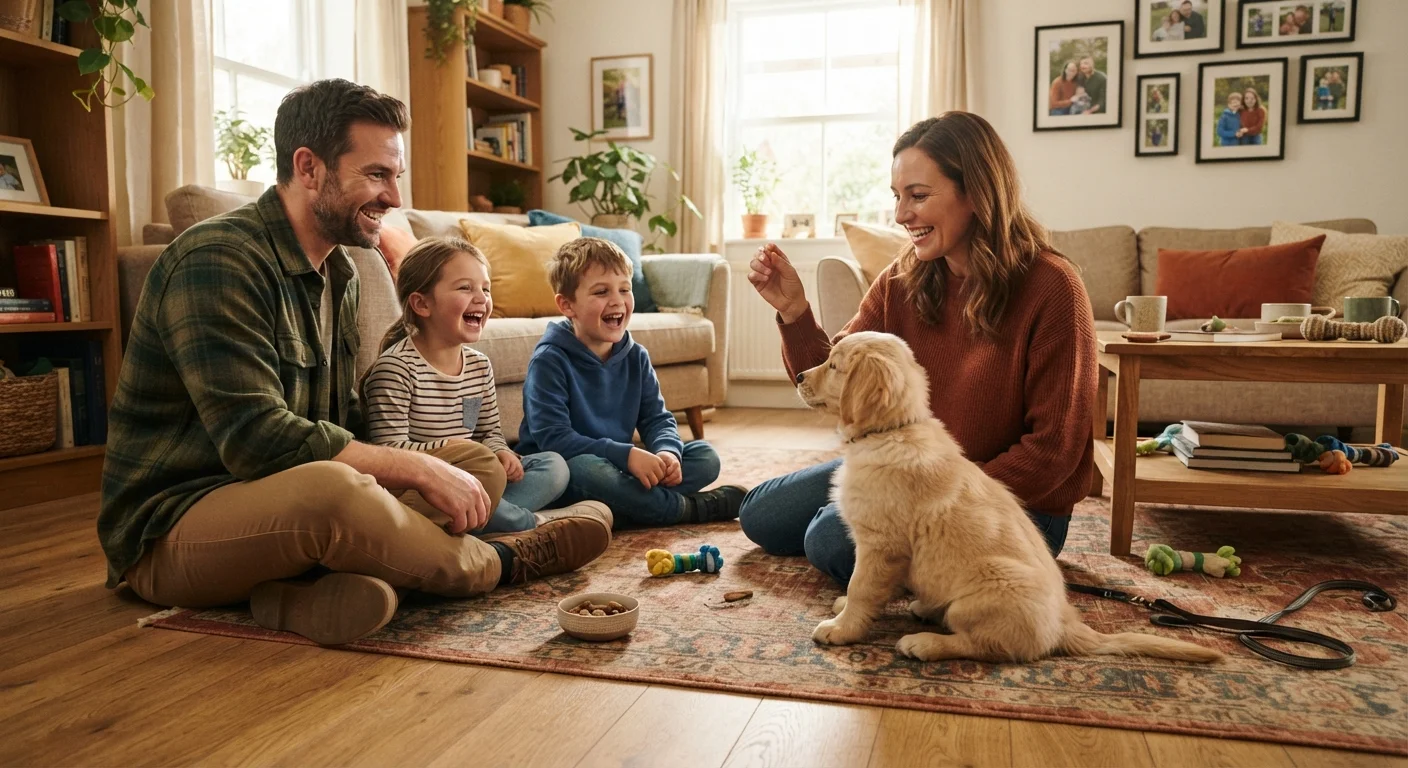
Before You Begin: What Your Dog Needs to Learn
Bringing a dog home is exciting, but launching into training on day one without a plan often backfires. Before your first session, it helps to understand what you're actually working toward — and why the order matters.
Dogs don't arrive understanding human expectations. What looks like stubbornness is usually just confusion. Your job in the first month isn't to produce a perfectly obedient dog; it's to build clear communication and trust so that learning can stick. Check the readiness checklist to make sure your home environment, tools, and mindset are set up before your first session.
Positive reinforcement
Rewarding a behavior immediately after it happens to make that behavior more likely to occur again. Treats, praise, and play are all common rewards.
Luring
Using a treat held in your hand to guide your dog into a specific position (like a sit or down) before they've learned the verbal cue.
Recall
The behavior of coming back to you when called. It's considered one of the most important safety skills a dog can have.
Impulse control
A dog's ability to pause and choose a calm behavior rather than immediately reacting to something exciting or tempting. Commands like 'leave it' and 'stay' build this skill.
Cue
A signal — spoken word, hand gesture, or sound — that tells your dog a specific behavior is being asked for. Most people call these commands.
The single most important mindset shift: training isn't a separate activity you do for ten minutes. Every interaction teaches your dog something — what earns attention, what gets ignored, what makes you react. The more consistent you are across all those moments, the faster your dog learns.
Week 1: Settling In and Learning Your Name
Your primary goals this week are helping your dog feel safe and teaching reliable name recognition. A dog that hasn't settled emotionally yet won't absorb commands well — stress and novelty compete directly with learning.
- Establish a predictable routine. Feed, walk, and rest at consistent times. Routines lower anxiety and make it easier for your dog to anticipate what's coming next.
- Teach name recognition. Say your dog's name once, and the moment they look at you, reward immediately with a small treat or enthusiastic praise. Repeat 10–15 times a day in short bursts.
- Introduce the crate or sleeping area positively. Toss treats inside, feed meals near it, and never use it as punishment. A dog that sees its space as safe will settle far more quickly.
Also schedule a first vet visit this week if you haven't already — a health baseline matters before you ramp up physical training demands.
Keep Early Sessions Very Short
Puppies and newly adopted dogs have limited focus — five minutes of engaged training beats twenty minutes of a distracted dog ignoring you. Set a timer, stay upbeat, and quit while your dog is still eager. This keeps the experience positive and makes them more likely to engage next time.
Week 2: Core Commands and Impulse Control
Now that your dog is starting to relax into the routine, introduce the foundational cues most families need daily:
- Sit — Lure your dog's nose upward with a treat held between your fingers; as their bottom naturally lowers, say "sit" and reward the moment contact is made. Practice 5–6 repetitions per session.
- Stay — Ask for a sit, then take one step back. If your dog holds position even for two seconds, reward generously. Gradually increase duration before distance.
- Leave it — Place a treat on the floor, cover it with your foot. When your dog stops pawing and looks away, reward from your other hand. This builds the impulse control that prevents a hundred household problems.
Recall — coming when called — is a critical safety skill. Start indoors now, calling your dog's name followed by "come," and reward every single return with genuine enthusiasm. If your dog ever stops responding, see why recall breaks down for common causes and fixes.
Week 3: Expanding Skills and Adding Distractions
Week 3 is where many families get frustrated because their dog "suddenly" stops listening. What's actually happening is that your dog learned commands at home with no distractions — the real world has smells, sounds, and movement that compete heavily for their attention. This is normal.
The solution is to practice commands in progressively more challenging environments, but make the task slightly easier as distractions increase. If your dog can hold a sit for 10 seconds indoors, expect 2–3 seconds outdoors at first — that's not regression, that's a new context.
- Practice sit, stay, and come in your backyard or a quiet outdoor area.
- Add "down" this week: from a sit, lure the nose toward the ground between your dog's paws, then reward the moment elbows touch the floor.
- Work on loose-leash walking in low-traffic areas — reward your dog for walking beside you and stop moving the moment they pull.
Don't Punish Slow Progress
Raising your voice, physical corrections, or showing frustration can erode the trust you've spent weeks building. If your dog isn't responding as expected, it's almost always a signal to make the task easier — not to add pressure. Punishment-based methods can increase anxiety and create new behavior problems.
Week 4: Putting It All Together
By week four, your dog should respond reliably to sit, down, stay, come, and leave it in familiar settings. This week focuses on chaining behaviors in real life rather than isolated drills.
Ask for a sit before putting on the leash. Ask for a leave it before tossing a toy. Ask for a down before giving a meal. Embedding commands into everyday moments reinforces that these behaviors have real-world meaning — not just training-session value.
Also begin short "nothing in life is free" routines, where your dog earns access to things they want (walks, play, meals) by offering a calm behavior first. This isn't about dominance — it's about teaching your dog that calm, cooperative behavior pays off reliably. Understanding how this approach evolves is covered in depth in how training goals shift over time.
Common Mistakes in the First Month
Even well-intentioned families can unintentionally slow progress. Watch out for these patterns:
- Inconsistent rules
- If one person lets the dog on the couch and another doesn't, the dog isn't confused — the humans are. Agree on house rules before day one and enforce them equally.
- Repeating commands
- Saying "sit, sit, sit, SIT" teaches your dog that the first cue is optional. Say it once, guide or lure if needed, then reward.
- Training when frustrated
- Dogs read human body language and tension extremely well. A short pause or ending the session early is always better than pushing through frustration on either side.
- Skipping mental exercise
- A dog that isn't mentally stimulated will find its own outlets — often destructive ones. Puzzle feeders, sniff walks, and training itself all count as mental exercise.
Many of these pitfalls trace back to outdated training beliefs. Common training myths that conflict with current evidence are worth reviewing if you're finding progress stalled.
This article is for general informational and educational purposes only. If your dog shows signs of fear, aggression, or anxiety that interfere with daily life, consult a certified professional trainer or veterinary behaviorist for personalized guidance.