
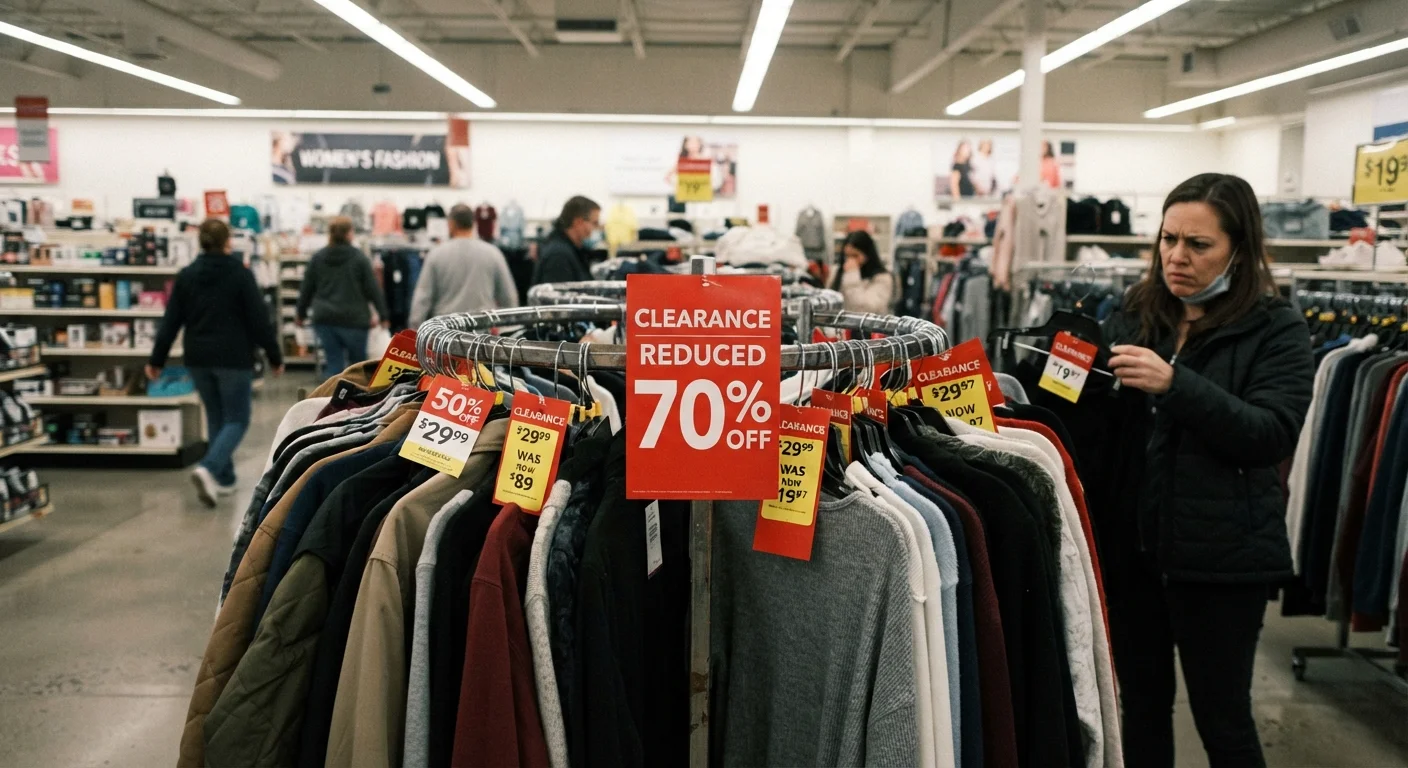
The Clearance Section Looks Like a Win — Until It Isn't
The red tag says 60% off. Your brain says "great deal." But before you put it in the cart, it's worth slowing down. Clearance sections are a legitimate way for retailers to move old inventory, but the mechanics behind the pricing don't always work in shoppers' favor.
This article breaks down the most common misconceptions about clearance shopping — so families can make clear-eyed decisions instead of impulse ones. For a broader look at how retail pricing tactics work, see our guide to spotting genuine savings vs. manufactured urgency.
Myth
The percentage-off label tells me exactly how much I'm saving.
Fact
The discount is calculated from the listed original price, which may have been set higher than what most shoppers ever paid.
Retailers set "original" or "regular" prices, sometimes called the "reference price," and discounts are measured against that figure. In some cases, an item may have been offered at the reference price only briefly — or not widely sold at that price at all. This practice, sometimes called reference pricing, is common across retail categories. The result is that a "60% off" label may reflect a much smaller real-world discount if the item rarely sold at full price. Checking the current going rate for the same or similar item through a search engine gives you a more grounded comparison point.
Myth
Clearance items are marked down because they're perfectly good products nobody happened to buy.
Fact
Items end up in clearance for a range of reasons, including returned merchandise, discontinued lines, damaged packaging, or models being phased out for newer versions.
Most clearance items are fine — but not all of them are. Some clearance merchandise consists of customer returns that have been repackaged, display models with minor wear, or goods approaching the end of a product cycle. A clearance clothing rack may hold well-made pieces that simply didn't move fast enough. But a clearance shelf of small appliances or electronics is worth inspecting more carefully. Check for opened packaging, missing accessories, or signs of prior use. For high-value clearance items, also verify that manufacturer warranties still apply.
Myth
I can always return clearance items if they don't work out.
Fact
Many clearance and sale items carry restricted return windows, store-credit-only policies, or are marked final sale with no return accepted.
Return policy rules often change when an item is moved to clearance. Some retailers apply a shorter return window — say, 14 days instead of 90 — to clearance items. Others designate them "final sale," meaning no returns or exchanges under any circumstances. These restrictions are sometimes printed on the tag, but not always prominently. Before purchasing, check the store's clearance return policy on their website or ask a staff member directly. This matters most for clothing (fit and quality checks at home), electronics, and items bought as gifts.
Myth
If something is on clearance, buying it is always saving money.
Fact
Buying a discounted item you wouldn't have otherwise purchased is spending money, not saving it — regardless of the markdown.
This is the most pervasive clearance myth. A $40 item marked down from $100 costs $40. If that item wasn't in your budget or your plan, you've spent $40 you wouldn't have spent. Savings only exist relative to a planned purchase: if you needed that specific item and were going to buy it at full price, a genuine markdown creates real value. Clearance sections are deliberately placed and visually designed to encourage browsing and impulse additions. Being aware of that design is the first step to making it work for you rather than against you. For more on how similar tactics play out during holiday events, see why deals on sale days aren't always what they seem.
Myth
Online clearance sections are more reliable because prices are easier to compare.
Fact
Online clearance can involve the same inflated reference prices, and may add non-refundable shipping or restocking fees that reduce or eliminate the apparent discount.
Digital clearance sections operate under the same pricing dynamics as in-store racks. Reference prices can be set high, and the convenience of online browsing can make it easy to add items quickly without pausing to verify. Online purchases also introduce additional costs: shipping charges on returned items, restocking fees for opened products, and in some cases processing delays that affect whether you can dispute a charge. Before clicking "buy" on clearance merchandise, check the full cost including shipping, and read the return policy for that specific item category — policies sometimes vary by product type within the same retailer.
What to Actually Check Before Buying Clearance
Knowing the myths is one thing — having a quick in-store checklist helps more. Before adding a clearance item to your cart, run through these questions:
- What is the current regular price elsewhere? A quick phone search takes 30 seconds and can confirm whether the original price was realistic.
- What is the return policy on this item? Look for "final sale" language on the tag or shelf label. If you can't return it, be more certain before buying.
- Do you actually need this item, or does the discount make it feel necessary? Clearance sections are designed to create urgency around items that weren't selling at full price — often for a reason.
- Are there hidden costs attached? Online clearance can carry non-refundable shipping fees that narrow the margin significantly. Our article on hidden costs that can swallow a good deal covers this in more detail.
Watch for 'Final Sale' Before You Commit
Final sale designations mean no returns, no exchanges, and no store credit — even if the item arrives damaged or doesn't fit. This label isn't always obvious at the point of selection. Check tags, shelf labels, and the retailer's clearance-specific return policy before purchasing, especially for clothing, footwear, and electronics.
Clearance shopping is most reliable when it's planned — for example, buying next season's items after a predictable end-of-season markdown cycle. Learn how those cycles work in our guide to end-of-season clearance. And for a look at the most common errors families make when chasing deals, see pitfalls families fall into when chasing seasonal deals.
~40%
Shoppers who regret impulse clearance purchases
Consumer behavior research consistently shows a significant share of unplanned discount purchases are later considered unnecessary by the buyer.
30–90 days
Typical standard return window vs. clearance window
Standard return windows at major US retailers often run 30–90 days, while clearance item policies are frequently shorter or marked final sale.