
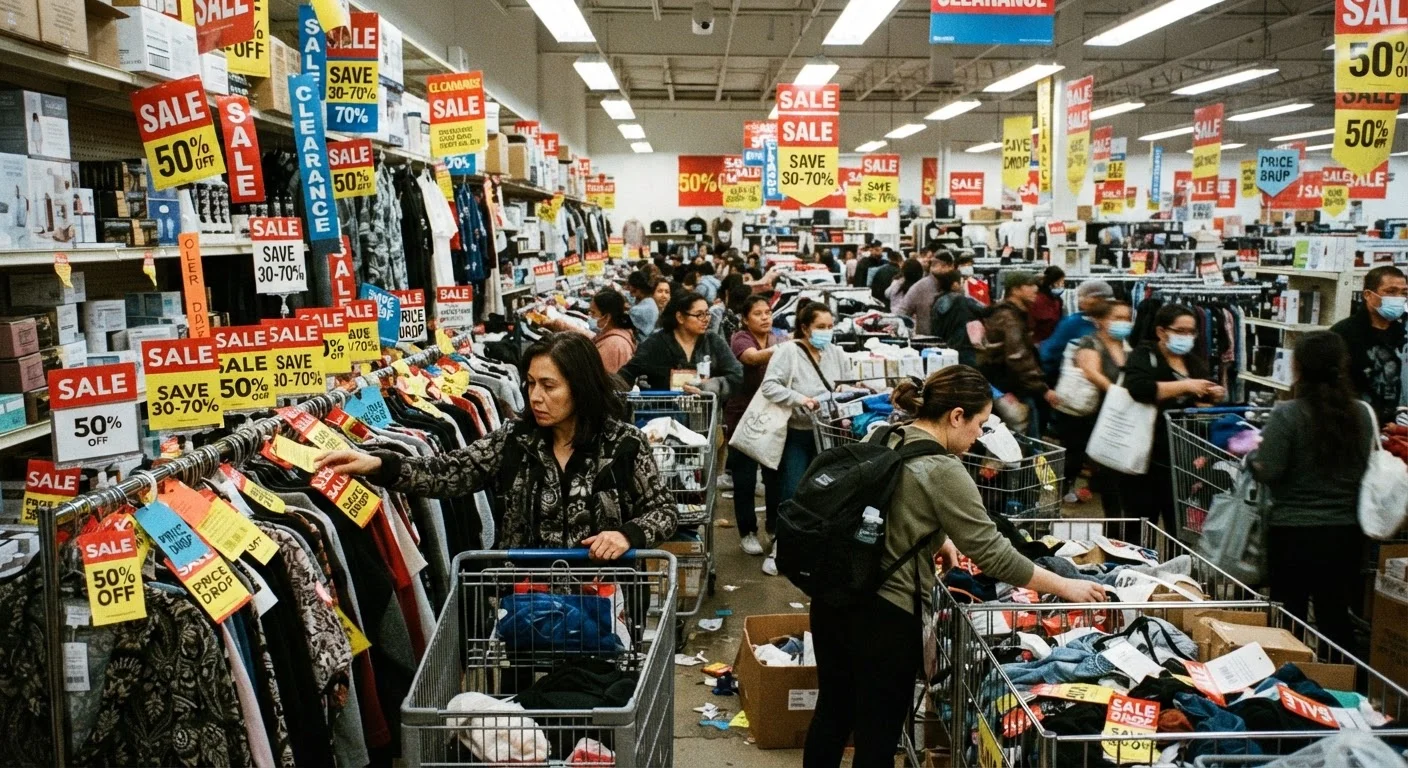
The Myth That Sale Days Automatically Mean Lower Prices
Black Friday, Labor Day, and other marquee sale events carry a powerful cultural assumption: everything must be cheaper. Millions of families plan purchases around these dates, assuming the calendar alone guarantees savings. The reality is more complicated.
Retailers set their own prices, and while genuine markdowns absolutely exist on sale days, not every tag represents a real reduction from what you could have paid a week earlier — or even later in the season. Understanding how retail pricing actually works is the first step toward spending smarter. For a deeper look at the timing behind these events, see our guide on how retail sales cycles actually work.
Myth
Everything is cheaper on Black Friday and other major sale days.
Fact
Studies of retail pricing consistently show that many items are not at their lowest price on Black Friday — some are priced the same as or higher than other sale periods during the year.
Consumer research organizations have tracked prices across major sale events and found that a meaningful share of Black Friday listings match prices available elsewhere in the year — particularly around end-of-season clearance windows or holiday weekend sales in other months. The spectacle of the event creates the impression of universal savings, but the data doesn't fully support it. For specific categories like apparel and small appliances, other times of year — post-holiday January, for example — can yield comparable or steeper markdowns.
Myth
The original price shown on a sale tag reflects what the item actually sold for before.
Fact
"Original" or "compare at" prices are set by retailers and may reflect a manufacturer's suggested retail price that few or no customers ever paid.
Retail pricing regulations in the US vary by state, and while the Federal Trade Commission has guidance discouraging deceptive price comparisons, the baseline "original" price on a tag doesn't have to represent the actual prior selling price in all cases. A product may have briefly sold at a higher price, or the reference point may be a manufacturer's suggested retail price (MSRP) that was never the common market rate. This is one reason why independently verifying a product's recent price history — rather than relying on the tag's "was" figure — is a more reliable approach. See also why clearance sections aren't always the bargain they seem for related dynamics.
Myth
If you miss a sale day deal, the price goes back up and you've lost your chance.
Fact
Many sale prices are repeated across multiple events throughout the year, and some items cycle through similar discounts regularly.
Urgency is one of retail's most effective psychological tools, and sale events are designed to create it. In reality, many of the same items reappear at similar price points during later sale windows — Cyber Monday, post-Thanksgiving, holiday week sales, and end-of-year clearance events often overlap significantly. Understanding that Black Friday vs. Cyber Monday each have different strengths can help families plan more strategically rather than reacting to artificial time pressure.
Myth
A bigger percentage discount always means a better deal.
Fact
The percentage off is only meaningful relative to an accurate baseline price — a 50% discount on an inflated price may be a worse value than a 20% discount on a fair one.
Percentage discounts are visually compelling, but they depend entirely on the starting number. Retailers have flexibility in setting reference prices, meaning two similar products can look drastically different in "savings" while actually landing at nearly the same final price. Training yourself to focus on the actual out-of-pocket cost — and comparing that across retailers and over time — is more useful than chasing the largest headline percentage. This is particularly relevant for electronics and bedding, categories where MSRP inflation is well documented by consumer watchdog organizations.
What to Watch for Before You Buy
Recognizing a manufactured deal versus a genuine one takes a little preparation — but not much. A few habits can significantly sharpen your judgment before and during any sale event.
Model Numbers Matter on Sale Days
When shopping for electronics or appliances during a sale event, always look up the exact model number — not just the product name. Retailers sometimes stock sale-specific configurations with fewer features than the standard version. A quick web search of the model number before purchase can reveal whether the spec sheet matches what you expect.
Track prices ahead of time. Many browser extensions and shopping tools record price histories for popular products. Checking a 90-day price history before a sale day tells you whether the current "sale" price is actually lower than the norm or simply dressed up to look like one.
Watch for model substitution. Some retailers stock lower-specification versions of popular electronics or appliances specifically for sale events. The brand and product name may match what you researched, but the model number can differ — with fewer features or lower build quality. Always compare model numbers directly, not just product names.
Factor in what you can't see. Shipping fees, restocking charges, and fine-print return restrictions can quietly offset a headline discount. Our article on hidden costs that can swallow a good deal walks through the most common ones to watch for.
Sale events can deliver genuine value — but only when you go in informed. Countdown timers and limited-stock warnings are also worth questioning. Reading a deal to spot manufactured urgency explains how to tell pressure tactics from real scarcity.
~1 in 3
Black Friday items not at their lowest annual price
Analysis by consumer price-tracking organizations has found roughly a third of Black Friday deals are available at equal or lower prices at other times of year.
87%
Shoppers who feel urgency pressure during sales
Consumer behavior research consistently shows the vast majority of shoppers report feeling pressure to buy immediately during sale events, regardless of whether stock is genuinely limited.
None of this means avoiding sale events altogether. It means treating them as one data point rather than a guaranteed win. Families who do a small amount of pre-sale research consistently make better purchase decisions than those who rely on the calendar alone. For more on common missteps, see pitfalls families fall into when chasing seasonal deals.