
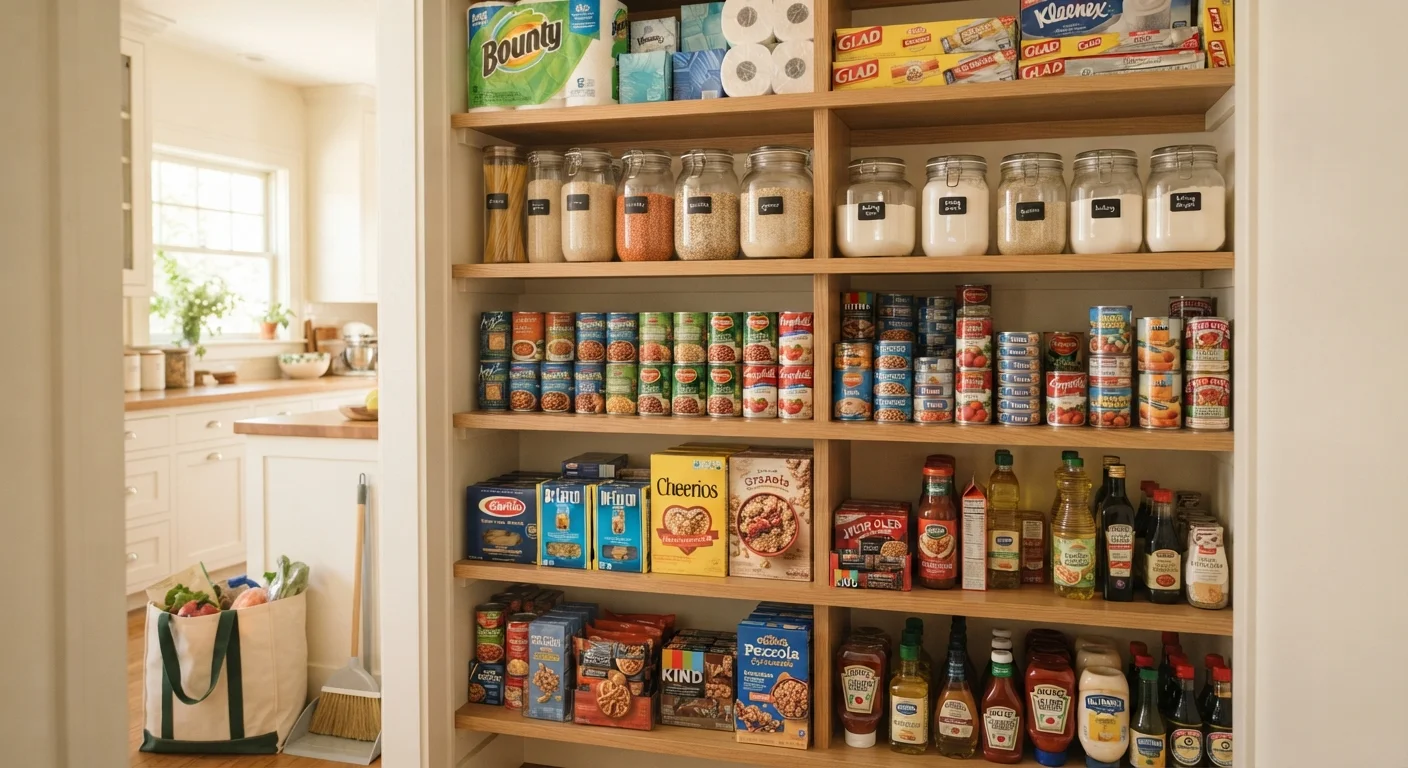
Why Buying Ahead Appeals to Families
The core appeal is straightforward: when a store reduces prices on something you'll eventually use anyway, buying more of it now means paying less overall. For households managing tight budgets, this logic is sound — particularly for shelf-stable goods like canned vegetables, cleaning supplies, paper products, and dry pasta.
Predictable retail events — end-of-season clearances, holiday sales, and category-specific promotions — make this approach more reliable. Families who understand how these cycles work can time purchases strategically rather than buying at full price by default. If you're new to this approach, an introduction to seasonal shopping habits can lay the groundwork.
The strategy also reduces shopping frequency. When your pantry is stocked, you're less dependent on weekly full-price restocking runs — which in turn can limit impulse purchases at the store.
Lower per-unit cost on regularly used items
Buying multiple units during a sale reduces the effective price per item compared to purchasing at full price over time. This holds true for shelf-stable household staples with predictable use rates.
Fewer last-minute, full-price shopping trips
A stocked pantry reduces the urgency of running to the store when you run out of something, which tends to cut both impulse purchases and transportation costs.
Protection against future price increases
Purchasing ahead of potential price changes — particularly for items prone to supply fluctuation — can provide a modest hedge against paying more later.
Smoother household budget management
Predictable, planned bulk buying during known sale periods can be easier to budget for than frequent small purchases at variable prices throughout the month.
The Real Costs of Stocking Up
Buying ahead ties up cash immediately. Even a modest sale haul — say, $80 worth of canned goods and household supplies — is money that can't go toward other expenses until the items are used. For families with limited liquidity, that trade-off matters more than the per-unit savings.
Storage is the other hard limit. Apartments and smaller homes may simply lack the pantry space, closet room, or garage capacity to hold bulk quantities. Overstocking leads to clutter, and in the case of food, it leads to spoilage if consumption is slower than expected. For a fuller picture of when volume buying helps and when it doesn't, see the trade-offs of buying in bulk.
There's also the risk of buying the wrong thing. Sale prices can make items feel like obvious choices even when your household doesn't use them often enough to justify the quantity. That's not saving — it's spending money on things that will go unused.
Large upfront cash outlay strains current budget
Even discounted bulk purchases require spending more money right now. Families with limited cash flow may find this strains their budget more than the savings justify.
Requires adequate storage space
Bulk quantities need room. Homes without dedicated pantry or storage space can quickly become cluttered, making the strategy impractical regardless of the savings.
Risk of spoilage or expiry before use
Buying more than your household can realistically consume before the expiration date turns a discount into a loss, particularly for food and personal care products.
Sale prices encourage impulse purchases
Discounted pricing can make items feel essential even when they're not regularly used, leading families to buy things they wouldn't otherwise choose at full price.
Savings are not guaranteed if habits change
Buying a six-month supply of a product assumes your household will keep using it. Preference changes, dietary shifts, or life events can leave you with stock you can't use.
How to Decide What's Actually Worth Stocking
Not every sale item deserves a spot in your cart. A simple filter helps: ask whether your household uses the item regularly, whether it stores well over the expected timeframe, and whether you have space to hold the quantity without inconvenience.
Know Your Household's Consumption Rate
Before deciding how much to stock up on any item, estimate how long your current supply lasts. If a bottle of dish soap lasts your household six weeks, buying four bottles makes sense; buying twelve likely doesn't. This calculation is quick and prevents over-purchasing from feeling like smart saving. For pre-sale planning tools, the pre-sale preparation checklist offers a structured approach.
Non-perishables with long shelf lives — think canned goods, paper towels, dish soap — are reliable candidates. Perishables or items with short expiration windows require more caution. For food decisions, shelf life and nutritional trade-offs matter equally; a comparison of fresh, frozen, and canned produce can help you weigh those choices.
Before any major sale event, a short household audit — checking current stock levels and recent usage — prevents duplicate buying. The household preparation checklist covers exactly this kind of pre-sale planning.
~30%
Typical household food waste share
The USDA has estimated that roughly 30–40% of the US food supply is wasted, much of it at the consumer level — a figure that underscores the risk of over-purchasing perishables.
1 in 3
Shoppers who exceed sale budgets
Consumer behavior research consistently finds that sale environments elevate unplanned spending, as discounts reduce the perceived cost of adding items to a cart.
Common Mistakes to Avoid
The most frequent error is confusing a lower price with a guaranteed saving. If you buy three bottles of a cleaning product at 30% off but only ever use one, the other two represent spending, not savings. Quantity multiplies both value and waste.
A second pitfall is buying without a ceiling. Going into a sale without a firm budget makes it easy to spend significantly more than planned — even while purchasing discounted items. Families who find themselves consistently overspending during sales events often benefit from reviewing common seasonal shopping pitfalls before the next event.
Finally, stocking up can create a false sense of preparedness if the items you've bought don't reflect your family's actual needs. A pantry full of discounted goods you don't regularly eat or use isn't a financial win — it's just a full pantry.