
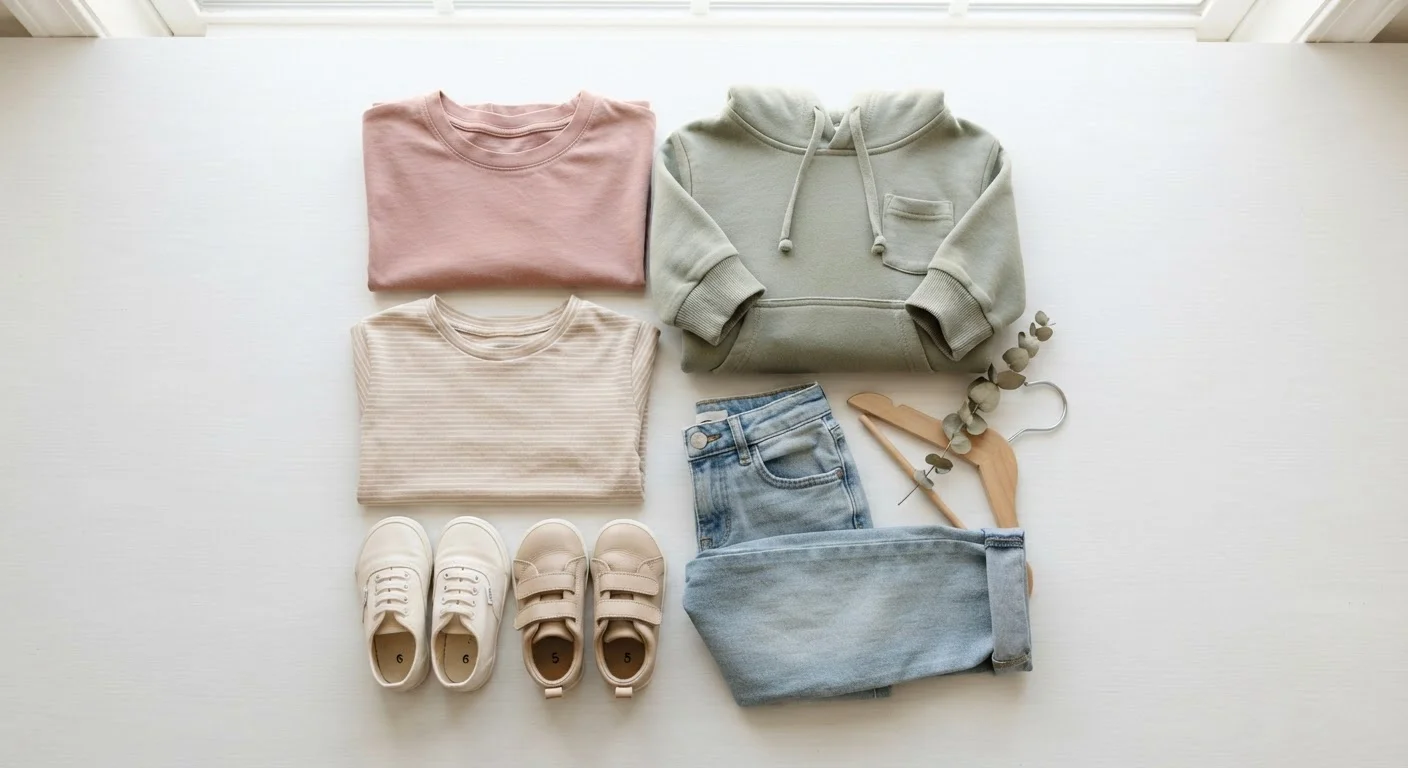
Why a Smaller Wardrobe Makes More Sense for Growing Kids
Children's clothing presents a unique challenge: sizes change fast, often every six to twelve months, and the window between "fits perfectly" and "too small" can feel remarkably short. Buying a large wardrobe for each size means spending money on items that may only get worn a handful of times before they're outgrown.
A capsule approach solves this by flipping the equation. Instead of filling a drawer with every possible option, you invest in a tight rotation of pieces that genuinely earn their keep. Each item gets worn frequently, which actually increases cost-per-wear value even if the upfront price feels similar. For families managing clothing costs across multiple children, this matters — see our guide on dressing a family of four without blowing the budget for the bigger picture.
There's also a practical daily benefit: fewer options mean faster mornings. When every top already works with every bottom, kids can dress independently without accidentally creating a combination that doesn't work — a win for parents and for growing confidence.
Involve Your Child in the Process
Let your child pick the accent color or choose between two similar options when building the wardrobe. Kids who have some ownership over their clothes tend to wear them more willingly and take better care of them. Within the structure of a capsule, there's plenty of room for personal expression.
How to Build a Kid's Capsule: The Core Pieces
A functional children's capsule wardrobe for one season typically includes:
- 4–5 tops in neutral or complementary tones (plain tees, simple henleys, lightweight long-sleeves)
- 3 bottoms that cover multiple occasions (one pair of jeans, one comfortable trouser or legging, one casual short or skirt depending on season)
- 1–2 layering pieces — a hoodie, zip fleece, or cardigan that goes over anything
- 1 slightly dressier option for family events or school presentations
- Footwear kept to two pairs: one everyday sneaker and one that handles slightly more formal occasions
The secret ingredient is color cohesion. If every top works with every bottom, a 5×3 combination already produces 15 different outfits from just eight pieces. This is the core logic behind the capsule idea, and it's especially effective for children because they don't need the full scope of adult dress codes.
For guidance on which specific types of pieces pull the most double duty, check out our piece on versatile wardrobe pieces that work for school, play, and family occasions.
~40%
Of clothing in average households goes unworn
Industry surveys and closet-audit studies consistently find that a significant portion of clothes owned — often estimated around 40% — are rarely or never worn.
6–12 months
Typical window per children's clothing size
Pediatric growth patterns mean many children move through clothing sizes within a single school year, making large per-size wardrobes especially inefficient.
Making a Capsule Wardrobe Last Longer — and Further
One often-overlooked advantage of a capsule approach is how naturally it supports sustainable clothing habits. When you own fewer pieces, each one gets more attention. Washing clothes inside-out, air-drying when possible, and choosing slightly more durable fabrics extends a garment's life considerably.
Classic silhouettes — a straight-leg jean, a crewneck tee — also hold up better as hand-me-downs than pieces tied to a specific trend. A younger sibling is far more likely to wear a plain navy hoodie than one printed with a licensed character from three years ago. This is where the capsule philosophy dovetails naturally with a smart hand-me-down strategy for families with multiple kids.
When it's time to refresh for a new school year or season, rather than replacing the whole wardrobe, assess what still fits and genuinely fills a gap. For a structured approach to that process, our season-by-season school wardrobe breakdown walks through it step by step.