
Why a Hand-Me-Down Strategy Pays Off
Passing clothes from one child to the next is one of the most straightforward ways families reduce clothing costs — but the results vary wildly. Without a plan, clothes arrive at the next sibling wrinkled, stained, or the wrong size for the season. With a little strategy, those same garments can look nearly new three years later.
The math is compelling: a well-made pair of children's pants that costs more upfront but survives two or three wearers has a dramatically lower cost-per-use than a cheap pair that pills and fades after a few months. For a deeper look at how price and durability interact, see our article on why "cheap" kids' clothes often cost more in the long run. A hand-me-down strategy works best when it starts at the point of purchase — not the moment you're pulling something out of a closet for the next kid.
Up to 3x
Lifespan of durable kids' clothing vs. low-quality alternatives
Consumer textile research consistently shows that construction quality — particularly seam strength and fiber content — is the primary driver of how long children's garments hold up through repeated washing and active wear.
~$900
Estimated annual spend on children's clothing per US household
According to the U.S. Bureau of Labor Statistics Consumer Expenditure Survey, families with children spend a meaningful share of their clothing budget on kids' apparel — making multi-sibling reuse one of the most impactful savings strategies available.
Shop With Future Siblings in Mind
Every clothing purchase for your oldest child is potentially a future purchase for the next one — if you shop accordingly. That means prioritizing two things: durability and neutrality.
Choose neutral base colors for core items that need to survive multiple children.
Bright trendy colors and novelty prints often look dated or gender-specific by the time a second sibling reaches that size. Navy, gray, olive, and white basics pair with anything and read as current across years.
Prioritize reinforced knees, double-stitched seams, and quality waistbands when evaluating durability.
These are the three areas that fail first on children's clothing. Reinforced knees survive the playground; double-stitched seams hold through repeated washing; quality elastic keeps pants fitting longer.
Size with room to grow, but not so much that clothing looks oversized or becomes a hazard.
Buying one size up on core items like pants and outerwear extends the usable window without looking sloppy, especially if adjustable waistbands are involved. However, clothes that are too big can be a tripping or safety hazard for young children.
Avoid dry-clean-only and high-maintenance fabrics for anything a child will wear regularly.
Special care requirements mean fewer washes and more damage when those instructions are accidentally ignored — which they will be. Machine-washable, tumble-dry-safe fabrics survive family laundry routines and still look good after dozens of cycles.
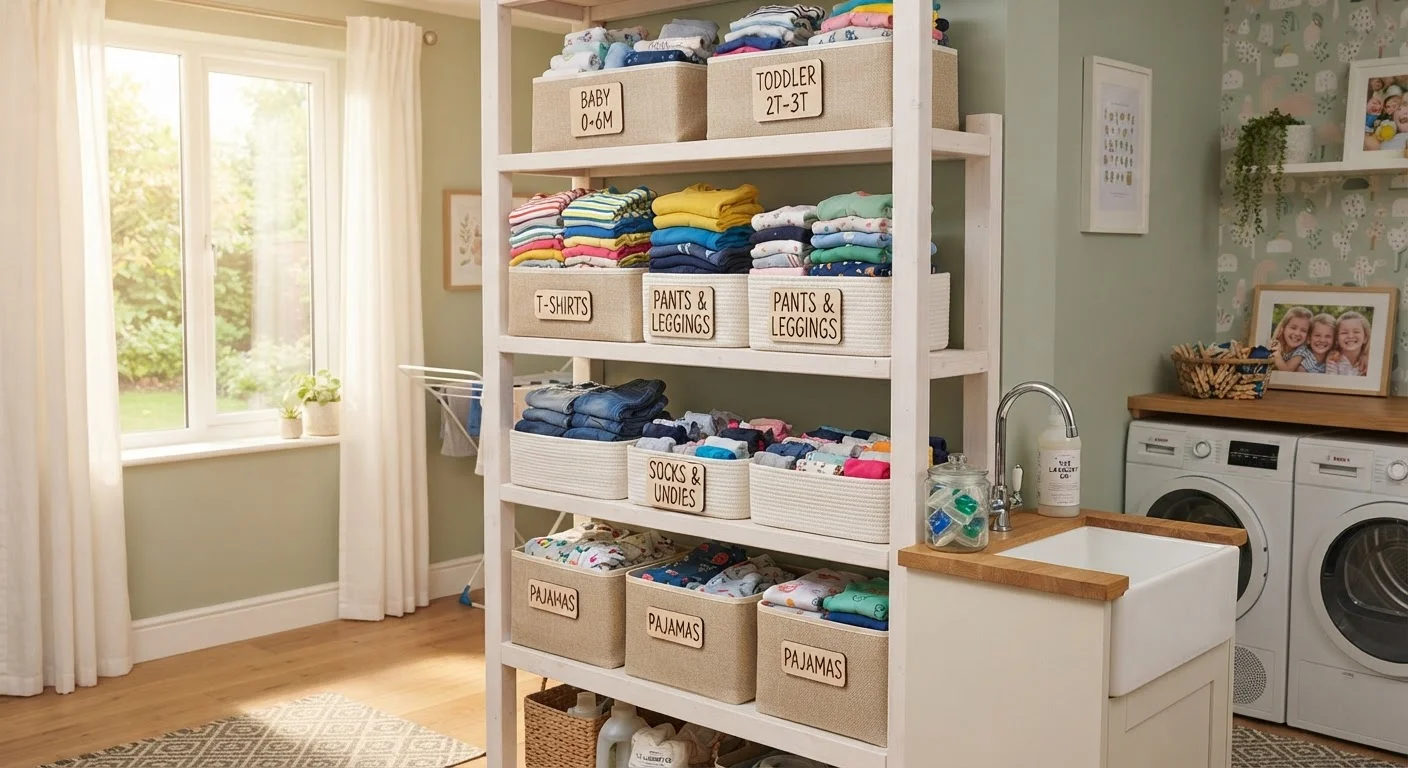
Store off-season clothes clean, dry, and labeled by size immediately after each child outgrows them.
Storing clothes promptly prevents them from being buried, lost, or damaged. Labeling by size means you can pull out exactly what you need when the next sibling hits that milestone, without sorting through everything.
For seasonal planning, consider pairing a hand-me-down approach with a capsule wardrobe approach — fewer, more versatile pieces that mix and match easily mean each item gets more use before it's passed along. And versatile pieces that work across activities hold up better simply because they're not reserved for one specific occasion.
Care Habits That Make Clothes Last
How you wash, dry, and store children's clothing matters as much as what you buy. Even durable fabrics break down quickly under harsh laundry conditions.
Wash Less Often When You Can
Not every item needs washing after every wear. Outerwear, pajamas worn for one night, and lightly worn tops can often go another round before laundering. Reducing unnecessary washing cuts fabric wear, saves water, and keeps clothes looking newer longer — all of which matter when you're trying to get three years of use out of a single garment.
A few habits make a significant difference: turn clothes inside-out before washing to reduce surface pilling, wash on cold or warm rather than hot, and avoid over-drying in a high-heat dryer — that's where elastic waistbands lose their snap and cotton shrinks. Zip up zippers before washing so they don't snag neighboring items. For delicate or embellished pieces, a mesh laundry bag adds protection with almost no extra effort.
Storage between seasons matters just as much. Clean clothes before storing — even faint food residue attracts insects and sets stains over time. Use breathable bags or bins rather than airtight plastic, which can trap moisture and cause mildew. Label everything by size and season so you're not guessing when the next child moves up.
Build a Simple Tracking System
The biggest operational challenge with hand-me-downs isn't the clothes themselves — it's keeping track of them. A simple system prevents duplicates, missing items, and size confusion.
One approach: use a consistent labeling method. Iron-on name labels or fabric markers inside the collar allow you to cross out one name and add the next. Alternatively, small colored tags sewn into seams can denote which child the item currently belongs to. A basic spreadsheet or phone note listing what's in storage by size and category (for example, "4T — 5 long-sleeve tops, 2 pairs of jeans, 1 fleece") saves time each season and helps you spot gaps before back-to-school shopping.
Before the next sibling steps into a size, do a quick condition audit — check for stains, worn knees, broken zippers, and missing buttons. This is also a good moment to cross-reference your seasonal clothing audit to decide what's worth passing along and what should be donated or recycled. Knowing what you already have prevents over-buying — one of the most common family style pitfalls.
Making Hand-Me-Downs Feel Special for the Next Wearer
The emotional side of hand-me-downs is real. Younger siblings sometimes feel like they're always getting someone else's leftovers, and that feeling can quietly affect how they treat and value their clothes. A few small gestures make a difference.
Let the next child "choose" from the hand-me-down pile rather than just receiving a pile of clothes — giving them agency builds ownership. Add one or two new pieces to go alongside the hand-me-downs, so the transition feels like a fresh start rather than a hand-off. For kids with strong personal style, consider whether small updates — like an iron-on patch, a different belt, or new laces on sneakers — can make a piece feel more theirs. Navigating self-expression in older kids is especially important once children start forming stronger opinions about what they wear.
For families looking beyond their own siblings, community clothing swaps offer a way to refresh a wardrobe without spending — trading out what no longer works for your family while picking up what does. And if you're considering supplementing hand-me-downs with pre-owned finds, our overview of secondhand vs. new clothing for children covers the practical and hygiene considerations worth knowing.
A Note on Hygiene and Safety
Hand-me-down clothing is generally safe and hygienic when washed before each new wearer uses it. However, items like car seat inserts, swimwear, and undergarments are typically not recommended for sharing between children due to hygiene or safety considerations — especially if car seat equipment has been involved in any kind of accident. Always review safety guidelines for any gear that's more than clothing.