
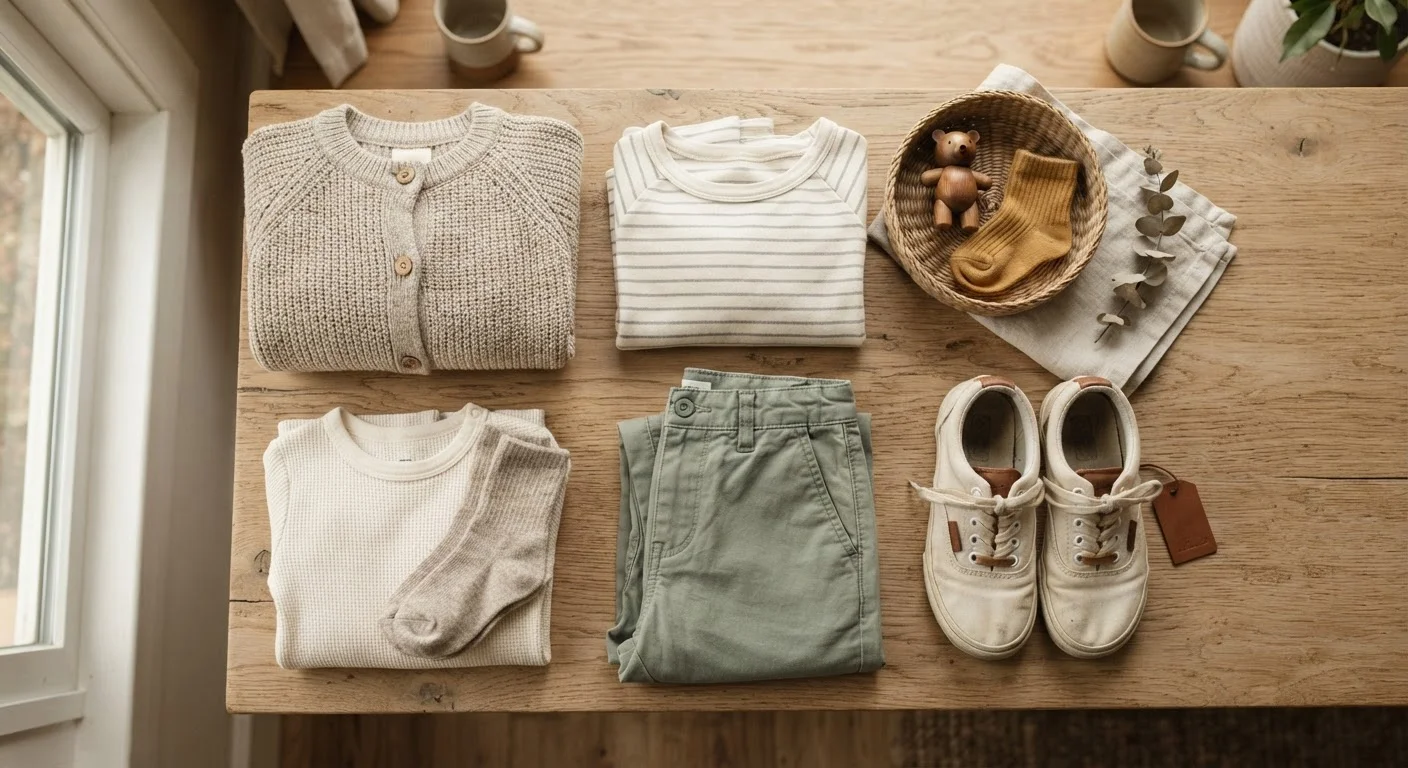
Why Multi-Use Clothing Makes Sense for Families
Every parent has experienced the wardrobe scramble: a school field trip on Monday, soccer practice Tuesday, Grandma's birthday dinner on Saturday. Before you know it, the closet is overflowing — yet somehow nothing feels right for the next event. The answer isn't more clothes; it's smarter clothes.
Pieces that move across multiple contexts — classroom, playground, and family table — let you buy less, spend less, and still have a child who looks pulled-together wherever the day leads. This approach fits neatly into the broader strategy covered in our guide to dressing a family of four on a budget, and it pairs naturally with a capsule wardrobe approach for kids — where fewer, more intentional pieces do more work.
Below are seven clothing types that consistently punch above their weight across a child's daily life.
Dark-Wash or Solid-Color Chinos
Well-fitted chinos (slim-cut trousers in cotton-blend fabric) are quietly one of the hardest-working items in a child's wardrobe. They look polished enough for a family restaurant or a school picture day, yet they're relaxed enough for a casual classroom or a low-key birthday party. Choose a mid-weight fabric and a non-distressed finish so the pants read as tidy in more formal settings. Navy, khaki, and grey are the three most cross-compatible colors.
Chinos bridge casual classrooms and family dinners without requiring a single outfit change.
Solid-Color Layering Tees
A plain crew-neck tee in a neutral or mid-tone color is the blank canvas everything else builds on. Under an open button-down it looks put-together; under a hoodie it's playground-ready; on its own on a warm day it's just comfortable. Opt for cotton or a cotton-modal blend, which holds color through washing better than 100% synthetic options. Buying several in the same fit but different shades gives a child a week's worth of variety without variety in the buying decision.
A solid tee works under almost anything, making it the most cost-effective item per wear.
A Zip-Up or Button-Front Cardigan
Layering is the single fastest way to shift an outfit from casual to occasion-ready, and a cardigan does it in one step. Thrown over a tee and chinos, it immediately reads as an intentional, assembled look suitable for school presentations, holiday gatherings, or family photos. The key is choosing a cardigan in a solid, muted tone rather than a novelty pattern so it pairs with a wider range of tops underneath. Machine-washable knit cardigans in cotton or cotton-acrylic blends tend to hold their shape best.
One cardigan layered over a basic tee can elevate any outfit from playground to party.
Elastic-Waist Jogger-Style Pants in Structured Fabric
Modern structured joggers — think a tapered cut in a French terry or ponte fabric rather than traditional athletic fleece — offer the comfort of sweats while looking considerably more polished. These are particularly valuable for younger children who need freedom of movement during school and play, but who also need to look reasonably tidy at family occasions. The elastic waist accommodates active kids (and growing waistlines), while the cleaner fabric and cut keep them from reading as purely athletic wear.
Structured joggers give active kids comfort at school without looking out of place at the dinner table.
A Clean, White or Navy Collared Shirt
A simple collared shirt — button-front Oxford or a neat polo — is the piece that reliably steps in when the occasion has even the faintest dress code. It works tucked into chinos for a family wedding, half-tucked for a school event, or left untucked with casual pants for a slightly smarter everyday look. White and navy are the most interchangeable options because they pair with nearly any trouser color. Wrinkle-resistant cotton blends make these far more practical for real family life.
A collared shirt is the single most reliable piece for navigating unexpected dress-up moments.
A Versatile Zip Hoodie
The zip hoodie earns its place through sheer flexibility: it layers over tees on cool mornings, functions as a light jacket on mild days, and serves as the outer layer on indoor-outdoor transitions. Choosing a zip style (rather than pullover) makes it easy to remove quickly when kids heat up during play — and it looks tidier worn open over a collared shirt than a pullover would. Solid muted colors integrate into more outfit combinations than logo-heavy or graphic options.
A zip hoodie transitions from chilly mornings to active afternoons without requiring a wardrobe switch.
Clean, Low-Profile Sneakers
Footwear often determines whether an outfit reads as casual or occasion-appropriate, and a pair of clean, low-profile sneakers in white, grey, or navy can do surprising work. They're comfortable enough for a full school day and active enough for the playground, yet styled simply enough to wear to a casual family gathering or a low-key celebration. The trick is keeping them clean — a quick wipe-down after muddy days preserves their versatility considerably longer.
Simple, well-maintained sneakers are the most cost-effective shoe for crossing multiple dress contexts.
Making It Work in Practice
The real magic happens when these pieces are chosen in coordinating colors. A palette of two or three neutrals (navy, khaki, grey) plus one accent (a warm red or forest green) means almost everything pairs with everything else. That gives you far more outfit combinations than the actual item count suggests.
Start With a Color-Coordination Test
Before buying any new piece, hold it against the items already in your child's drawer. If it pairs with at least three existing pieces, it earns its spot. If it only works with one specific outfit, it's a specialty item — and specialty items don't stretch a budget. This quick test takes about 30 seconds and can save you from low-use purchases that pile up fast.
Fabric choice matters just as much as style. Pieces that survive repeated washing without pilling, fading, or losing shape are the ones that stay versatile over time. Our breakdown of natural vs. synthetic fabrics can help you compare options before purchasing. And if you'd like a season-by-season roadmap for building on these basics, the school-year wardrobe planning guide walks through exactly what to add — and when.
Finally, remember that versatile pieces hold their value when passed down. Storing them well means a younger sibling can benefit from the same investment. Our hand-me-down strategy guide covers how to keep multi-use pieces in great shape for multiple wearers.