
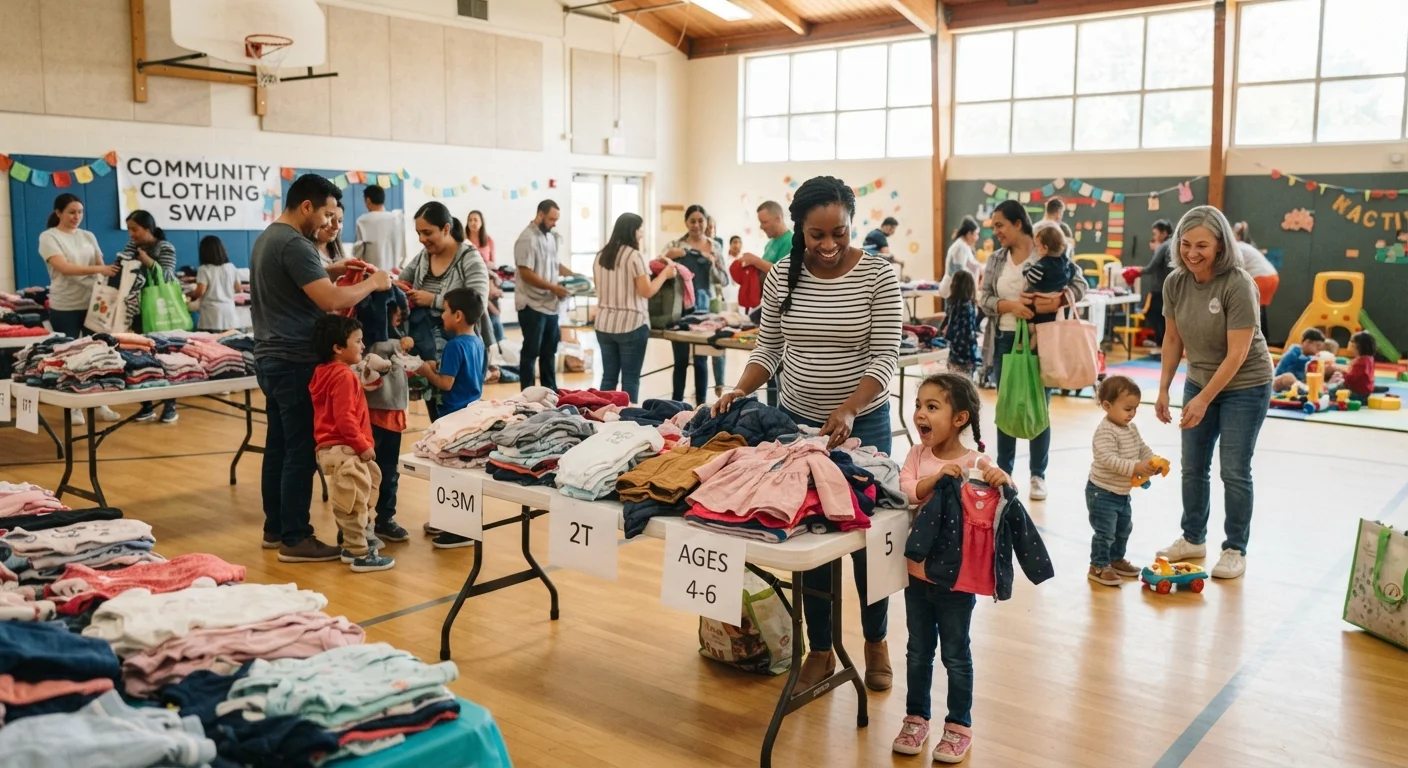
Why Clothing Swaps Make Sense for Growing Kids
Children grow fast — sometimes jumping an entire shoe size in a single school year. That pace of growth means perfectly good clothes become too small long before they wear out, leaving families with drawers full of outgrown items and an ongoing need to replace them. A clothing swap turns that cycle into an opportunity rather than a burden.
Instead of spending money on new items every season, families pool their surplus and each walks away with "new-to-them" pieces that fit right now. It's a practical, community-driven solution that saves money without requiring anyone to compromise on quality. For families already thinking carefully about their clothing budget, swaps work especially well alongside a wardrobe budget strategy that accounts for all four seasons.
~$130
Average annual spend on children's clothing per child
According to the U.S. Bureau of Labor Statistics Consumer Expenditure data, American families spend roughly this amount per child annually on apparel, a figure that adds up quickly across multiple kids.
3–4x
Size changes a child may go through in one year
Pediatric growth patterns mean young children — especially toddlers and early school-age kids — can move through multiple clothing sizes within a single year, making frequent wardrobe updates a practical necessity.
How a Typical Clothing Swap Is Organized
Most swaps follow a straightforward structure, whether they draw ten families or a hundred. Here's what the general process looks like:
- Collection period: Participants bring pre-sorted, clean clothing to a central location — a school gym, library meeting room, church hall, or large backyard.
- Sorting: Volunteers or organizers group items by size range (toddler, kids 4–6, kids 7–10, and so on) and sometimes by category — tops, bottoms, outerwear, shoes.
- Browsing: Families move through the sorted sections and select what they need.
- Token system (optional but common): Each item donated earns a token; tokens are spent to take items home. This keeps the exchange equitable without requiring a direct one-for-one trade.
- Leftover handling: What remains after the swap is typically donated to a local shelter, thrift program, or charitable organization — nothing goes to waste.
Before attending, do a quick seasonal clothing audit so you know exactly which sizes and items your child needs. Arriving with a mental list saves time and keeps you from grabbing things that won't actually get worn.
Sort Before You Swap
Pack your swap donations in labeled bags sorted by size — for example, "Boys 4T" or "Girls size 6–7." Organizers and other attendees will appreciate the head start, and your items are more likely to find the right home quickly. It also signals to other participants that your contributions are thoughtfully prepared.
What to Bring — and What to Leave Home
The golden rule of clothing swaps: only bring what you'd be happy to receive. That means every item should be freshly washed, free from stains or odors, and in working condition — zippers zip, buttons are present, hems are intact. Clothes with significant fading, pilling, or tears should go to textile recycling programs instead.
Great items to bring include lightly worn seasonal staples — winter coats, rain jackets, school-appropriate pants, and versatile pieces that work across multiple occasions. Specialty or costume items are usually less in demand unless the swap specifically invites them.
Once you get items home from a swap, wash them before your child wears them — a standard step that keeps everyone comfortable and confident about hygiene. For a fuller look at secondhand clothing considerations, our article on secondhand vs. new clothing covers the practical trade-offs honestly.
How to Start a Swap in Your Neighborhood
If there's no swap in your area, starting one is more manageable than it sounds. Begin small — even five families swapping among themselves can make a meaningful difference in what everyone spends on kids' clothes each season.
A few things that make first-time swaps run smoothly:
- Set clear guidelines upfront. Communicate the condition standards, size ranges you'll cover, and any item limits before the event so everyone arrives prepared.
- Choose a comfortable, organized space. Tables for sorting by size make browsing much easier and faster.
- Designate a donation partner. Agree in advance on where leftovers will go — it takes pressure off the organizer and ensures nothing ends up in a landfill.
- Keep a simple sign-in or token system. Even a paper tally at the door helps manage fairness without complicated logistics.
Community platforms, school parent groups, and neighborhood apps are all useful places to promote an upcoming event and gauge interest. Once you've run one successful swap, participation tends to grow organically as families experience the value firsthand. And if your family already practices a hand-me-down strategy across siblings, a community swap is a natural extension of that same mindset — just scaled to the whole neighborhood.
“The most sustainable garment is the one that already exists. Finding ways to keep clothes in use — whether through hand-me-downs, swaps, or secondhand markets — extends the value of every item and reduces the pressure to constantly buy new.”
— Ellen MacArthur Foundation, Organization focused on the circular economy and sustainable production