
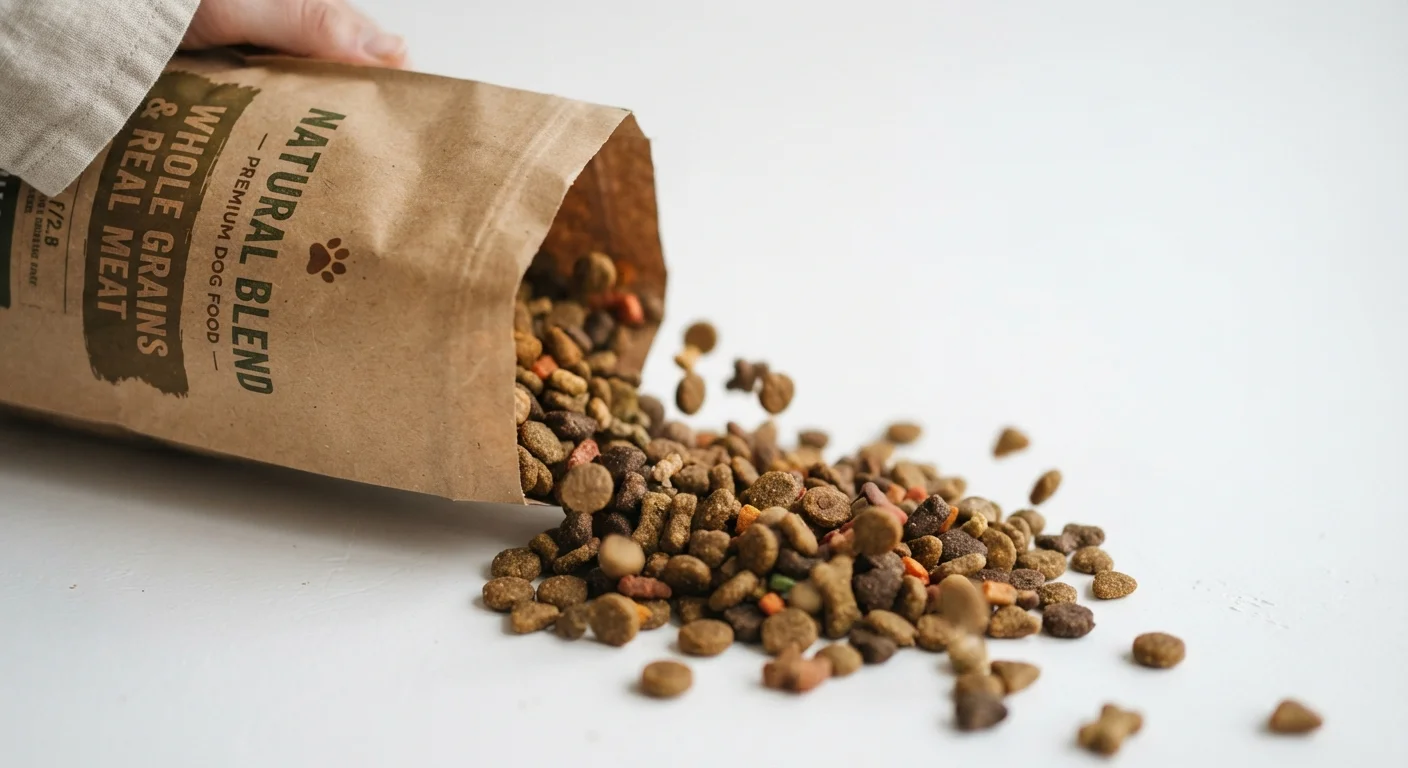
Why Grain-Free Marketing Is So Persuasive
Walk down any pet food aisle and you'll see "grain-free" displayed as prominently as any other selling point. The implied message is straightforward: grains are fillers your pet doesn't need, and removing them is a step toward better health. For families trying to do right by their pets, that message is understandably appealing.
But nutritional marketing and nutritional science don't always tell the same story. Understanding what the research actually says — and what remains uncertain — helps you make feeding decisions based on evidence rather than packaging design. If you'd also like help interpreting what else is printed on those bags, our guide to reading a pet food label without getting lost is a useful companion.
Myth
Grains are unnatural fillers that pets cannot properly digest.
Fact
Dogs have evolved digestive enzymes specifically for starch digestion, and most pets tolerate grains well.
The idea that grains are biologically inappropriate for dogs is often rooted in "ancestral diet" marketing rather than comparative physiology. Research published in Nature has documented that dogs developed additional copies of the amylase gene — used to break down starch — compared with wolves, an adaptation linked to cohabitation with grain-eating humans. Whole grains like oats, barley, and brown rice also contribute fiber, B vitamins, and minerals. They are ingredients, not padding.
Myth
Grain-free diets are the right solution if your pet has food allergies.
Fact
True grain allergies in pets are relatively uncommon; beef, chicken, dairy, and eggs are far more frequent culprits.
Food allergies in pets are less common than many owners assume, and when they do occur, the trigger is most often an animal protein, not a grain. Elimination diet trials — conducted under veterinary supervision using a novel protein or hydrolyzed protein food — are the standard diagnostic approach. Switching to a grain-free food that still contains the same protein source is unlikely to resolve an allergy and may delay an accurate diagnosis.
Myth
Grain-free automatically means lower in carbohydrates.
Fact
Many grain-free formulas replace grains with legumes, potatoes, or tapioca, which are also significant sources of carbohydrates.
Removing oats or rice from a recipe doesn't remove carbohydrates — it shifts their source. Peas, lentils, chickpeas, and sweet potatoes are all carbohydrate-dense ingredients commonly used in grain-free formulations. If reducing total carbohydrate content is a goal for your pet's health plan, review the full ingredient list and discuss it with your veterinarian rather than relying on a "grain-free" label alone.
Myth
The FDA investigation proved grain-free food causes heart disease in dogs.
Fact
The FDA identified a potential association worth investigating, but has not established a confirmed causal link.
In 2018, the FDA began investigating reports of dilated cardiomyopathy (DCM) in dogs eating grain-free diets, particularly those high in legumes. As of the agency's public updates, a definitive causal mechanism had not been confirmed. The science is ongoing and complex. DCM has multiple potential causes, including genetic predisposition in certain breeds. This doesn't mean the concern should be ignored — it means the picture is still developing, and your veterinarian is the right person to help you weigh the current evidence for your specific dog.
Myth
Premium or expensive grain-free foods are nutritionally superior to grain-inclusive foods.
Fact
Price and grain content are not reliable indicators of overall nutritional quality.
Nutritional adequacy in pet food is determined by whether a product meets the profiles established by the Association of American Feed Control Officials (AAFCO), not by its ingredient philosophy or price point. A grain-inclusive food that meets AAFCO standards for your pet's life stage can be nutritionally complete and appropriate. Evaluating a food's AAFCO statement — visible on the label — is a more reliable quality check than its price or its grain-free status. See our companion guide on what pet food labels actually mean for more on how to read those statements.
What the Evidence Actually Shows
The clearest signal to emerge from recent research is the FDA's ongoing investigation into a potential association between grain-free diets — particularly those high in legumes like peas and lentils — and dilated cardiomyopathy (DCM), a serious heart condition in dogs. The investigation, which began in 2018, has not established a definitive causal mechanism, and research is still active. That uncertainty matters: it means neither alarm nor dismissal is the right response.
FDA Is Still Actively Investigating DCM
The FDA has not cleared grain-free diets of concern, nor has it issued a definitive warning to stop feeding them. The investigation into a potential link with dilated cardiomyopathy remains ongoing. If you have a large or giant breed dog — breeds already at elevated genetic risk for DCM — discussing diet with your veterinarian is especially important.
What's well established is that dogs are omnivores capable of digesting a wide range of ingredients, including grains, and that cats are obligate carnivores whose carbohydrate needs are minimal regardless of grain content. For both species, the overall nutritional profile of a food — protein quality, amino acid completeness, vitamin and mineral balance — matters far more than whether it contains oats or brown rice.
To dig deeper into how to evaluate that nutritional profile on any bag, see our article on reading a guaranteed analysis panel without getting lost.
2018
Year FDA began its grain-free DCM investigation
The U.S. Food and Drug Administration opened a formal investigation into a potential link between grain-free diets and dilated cardiomyopathy in dogs after receiving an unusual number of reports.
~1–2%
Estimated prevalence of true food allergies in dogs
Veterinary dermatology literature suggests food allergies affect a small minority of dogs, with animal proteins being the most common triggers rather than grains.
Making a Confident, Informed Decision
If your pet has been thriving on a grain-free diet with no health concerns, there may be no urgent reason to switch — but a conversation with your veterinarian is worthwhile, especially for larger dog breeds with elevated DCM risk. If you're considering grain-free for the first time, ask your vet whether there's a specific health reason to pursue it for your pet, not pets in general.
Label claims like "natural," "ancestral," and "wild-inspired" often appear alongside grain-free positioning. Understanding what those terms do and don't mean can help you filter out noise — our article on what "natural," "organic," and "human-grade" actually mean on pet food packaging explains which claims carry regulatory weight and which are mostly marketing language.
This article is for general informational and educational purposes only. It is not veterinary advice. Always consult a licensed veterinarian before making significant changes to your pet's diet, particularly if your pet has existing health conditions.