
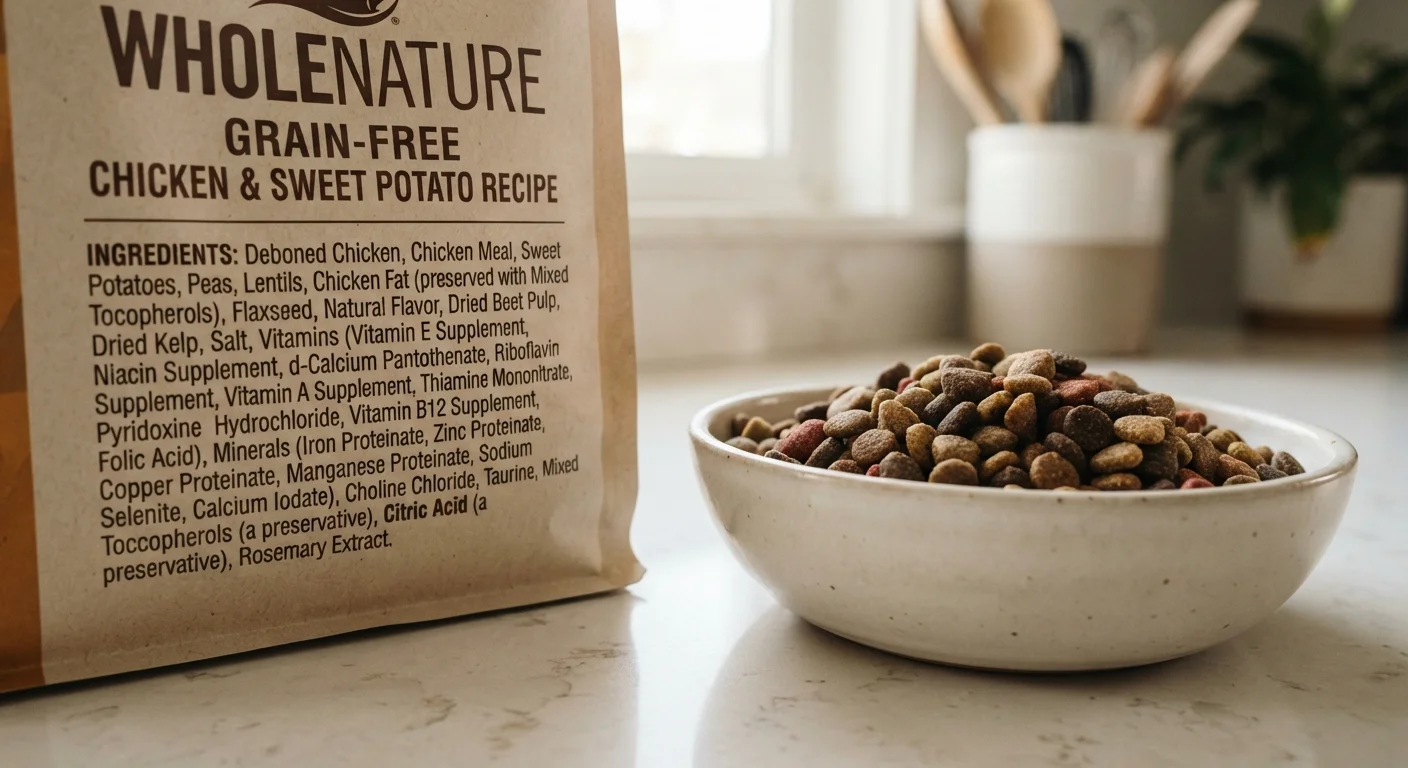
Why Protein Terminology on Labels Is So Confusing
Walk down the pet food aisle and you'll see packaging that lists "chicken," "chicken meal," "chicken by-product," or "poultry by-product meal" — often within a few inches of each other. These terms are not interchangeable, and understanding what each one describes can change how you evaluate a food entirely.
Pet food labels in the U.S. are regulated by the Association of American Feed Control Officials (AAFCO), which defines specific ingredient terminology. This means the words manufacturers use aren't marketing choices — they're defined categories with real differences in content, processing, and nutritional value. The challenge for families is that the definitions aren't printed on the bag.
This reference guide translates the most common protein listings into plain language. It's part of a broader look at label reading — for the full picture, see what pet food labels actually mean.
A Plain-Language Breakdown of Common Protein Terms
Here's what each major protein listing actually means under AAFCO definitions:
Chicken
Clean flesh of slaughtered chicken, with or without skin and bone, in its fresh, raw form. Because it contains significant water weight, it ranks high in the ingredient list but contributes less concentrated protein per pound than a "meal" version after cooking.
Chicken Meal
Rendered, dried chicken from which most moisture has been removed. The result is a concentrated protein powder with roughly four times the protein density of fresh chicken by weight — making it a highly efficient protein source in dry kibble.
Chicken By-Product Meal
Rendered and dried clean parts of chicken carcasses — such as necks, feet, undeveloped eggs, and intestines — but not feathers. Nutritionally variable but generally digestible; considered lower quality than named muscle meat by many veterinary nutritionists.
Poultry By-Product Meal
Similar to chicken by-product meal, but sourced from an unspecified mix of poultry species. The generic "poultry" designation means the species composition can vary between batches, making it less consistent than a named-species ingredient.
Meat Meal
Rendered mammalian tissue from unnamed species, excluding blood, hair, hoof, horn, and certain other parts. Because no species is named, families who want to avoid certain proteins — for allergy management, for example — should treat this ingredient with caution.
Fish Meal
Rendered, dried fish tissue. A concentrated protein and omega-3 fatty acid source. As with other meal ingredients, quality can vary depending on the species used and the rendering process.
Hydrolyzed Protein
Protein that has been broken down into smaller peptides through a chemical or enzymatic process. Commonly used in foods formulated for pets with food sensitivities, because the fragmented proteins are less likely to trigger an immune response.
Plant Protein Concentrate
Protein extracted from plant sources such as peas, soy, or legumes. These ingredients boost the crude protein percentage shown on the label but have a different amino acid profile from animal proteins, which matters especially for cats, who are obligate carnivores.
One important note on ingredient order: ingredients are listed by weight before cooking. Water-heavy ingredients like fresh chicken weigh more raw, which is why "chicken" can appear first even when a dry food may contain less actual chicken protein than a food listing "chicken meal" first. For more on how to interpret these numbers accurately, see reading the guaranteed analysis panel.
Are By-Products Actually Bad?
"By-product" has a poor reputation, but the science doesn't fully support the alarm. AAFCO defines poultry by-products as clean parts of slaughtered poultry — lungs, spleen, kidneys, brain, liver, and similar organs — but explicitly excludes feathers. These organ meats are nutrient-dense and are considered normal components of a prey animal's body.
The concern many owners have is about consistency and quality control. By-product ingredients can vary more in their composition from batch to batch than named muscle meats. However, this doesn't automatically make a food inferior — it depends on the manufacturer's sourcing standards and quality controls, which are not visible on the label.
By-Products and Regulatory Oversight
AAFCO definitions set baseline standards for what can and cannot be included under each ingredient term, but they don't govern individual manufacturer quality controls. Two foods listing "chicken by-product meal" may differ significantly in consistency depending on their sourcing practices. If sourcing transparency matters to you, some manufacturers publish details about their ingredient suppliers — though this information is typically found on their websites, not the bag itself.
If you're thinking about reducing your reliance on commercial food entirely, it's worth reviewing the real challenges involved. Home-cooked pet meals carry nutritional risks that families often underestimate.
Practical Tips for Comparing Protein Sources
When evaluating protein quality on a label, keep these principles in mind:
- Named sources are more specific than generic ones. "Chicken meal" tells you more than "poultry meal," which could include a mix of species.
- Multiple protein sources aren't necessarily better. A food with five protein ingredients listed toward the bottom may contribute less protein than a single named meal listed second.
- "Meal" isn't a dirty word. Rendered meals are concentrated and can be a legitimate, digestible source of animal protein.
- Plant proteins inflate crude protein numbers. Ingredients like peas, lentils, and chickpeas are high in protein, but the amino acid profile differs from animal protein. Some pets — especially cats — have specific needs that plant proteins don't fully meet.
Label claims like "natural" or "human-grade" don't tell you much about protein quality specifically. What those marketing terms actually mean is a separate question worth understanding.
This article provides general educational information about pet food labeling and is not a substitute for veterinary nutritional advice. If your pet has specific health conditions or dietary needs, consult a licensed veterinarian or board-certified veterinary nutritionist.