
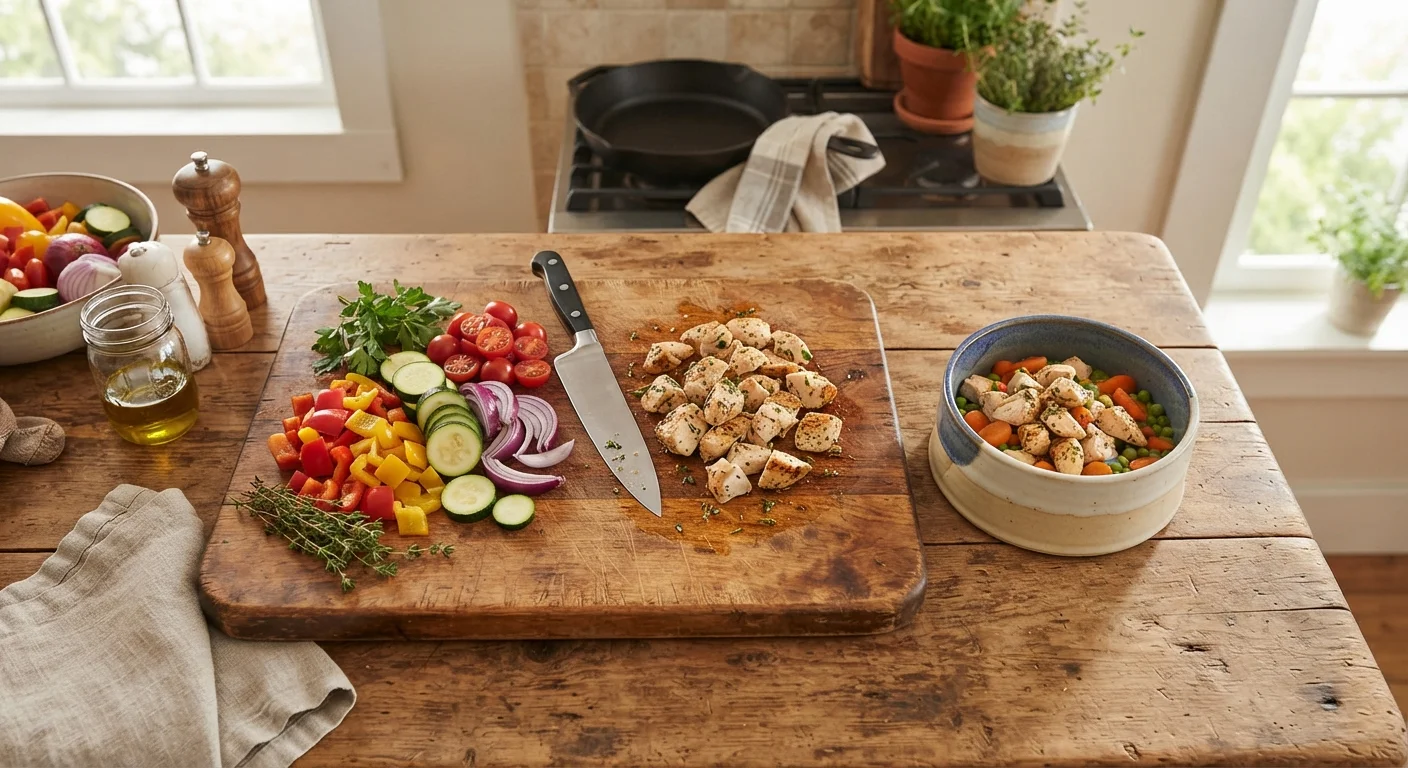
Why Families Are Drawn to Home-Cooked Pet Food
The appeal is understandable. After reading a confusing commercial pet food label — or worrying about a recall — many families wonder whether cooking for their pet is simply safer and healthier. If you're already thinking about meal planning for your household, it's natural to extend that thinking to your pet's bowl.
Home cooking for pets has genuinely grown in popularity, and veterinary nutritionists have taken note. The conversation is worth having — but it requires an honest look at both what works and what can go wrong.
Full visibility into every ingredient used
You know exactly what goes into your pet's bowl, which is reassuring for owners managing allergies or ingredient sensitivities. This level of transparency is genuinely difficult to achieve with processed commercial foods.
Avoids additives and preservatives
Home-cooked meals contain no artificial preservatives, coloring agents, or flavor enhancers. For pets with documented sensitivities, removing these variables can help identify dietary triggers.
Highly palatable for picky eaters
Many pets find fresh, lightly cooked food more appealing than commercial kibble. This can be useful for senior pets or those recovering from illness who have reduced appetite.
Customizable for specific health conditions
Under veterinary guidance, homemade diets can be precisely tailored for pets with kidney disease, pancreatitis, or food allergies — conditions where off-the-shelf formulas may not be optimal.
Strengthens the human-pet bond
Preparing food for a pet can feel meaningful and caring. Families who prepare meals together report feeling more connected to the process of their pet's wellbeing.
The Real Risks Families Often Underestimate
The most significant danger of homemade pet diets is nutritional imbalance. Pets — especially cats — have very specific requirements for certain nutrients that are difficult to meet through whole foods alone. Taurine deficiency in cats, for example, causes irreversible heart disease. Calcium-to-phosphorus imbalances are common in meat-heavy homemade diets for dogs and can damage developing bones over time.
A widely cited analysis of homemade dog food recipes found that the large majority failed to meet established nutritional standards. This is not a minor gap — chronic deficiencies build silently over months or years before clinical signs appear.
What AAFCO Standards Actually Mean
AAFCO (Association of American Feed Control Officials) sets the nutritional guidelines that govern most commercial pet foods sold in the United States. A label stating a food is 'complete and balanced' for a life stage means it has either been formulated to meet those guidelines or passed a feeding trial. Homemade diets have no equivalent external verification. This doesn't make commercial food automatically superior in every dimension, but it does mean you're accepting responsibility for that assurance when you cook from scratch.
Understanding what pet food labels actually tell you can help you evaluate whether a commercial food is meeting your pet's needs before deciding to switch approaches entirely.
Most homemade recipes are nutritionally incomplete
Research published in veterinary nutrition journals consistently shows that the majority of home-cooked pet food recipes — including those from popular books and websites — fail to meet established nutritional guidelines for dogs or cats.
Deficiencies build silently over time
Unlike an obvious illness, nutritional gaps from an unbalanced diet accumulate over months or years. By the time symptoms appear — such as coat deterioration, lethargy, or bone problems — significant harm may already have occurred.
Requires significant time and consistency
Safe home cooking for pets isn't a set-and-forget system. Preparing balanced meals, sourcing appropriate supplements, and maintaining a consistent recipe demands ongoing effort that many busy families underestimate.
Costs are often higher than expected
When you account for quality protein, required supplements, and the consultation fee for a veterinary nutritionist, home-cooked meals frequently cost more per serving than a high-quality commercial diet.
Food safety risks from raw or undercooked ingredients
Improper handling of raw meat can expose both pets and family members — particularly children and immunocompromised individuals — to pathogens such as Salmonella and E. coli.
No regulatory oversight or standardized testing
Commercial pet foods that carry an AAFCO (Association of American Feed Control Officials) nutritional adequacy statement have been formulated or tested to meet defined standards. Homemade recipes carry no equivalent guarantee.
Making Home Cooking Work Safely
If you want to pursue homemade meals for your pet, the most important step is consulting a board-certified veterinary nutritionist — not just your general-practice vet, who may have limited training in clinical nutrition. A nutritionist can develop a recipe tailored to your specific pet's age, weight, health status, and activity level.
Supplements are almost always required. Calcium, specific B vitamins, and trace minerals are hard to supply through food alone. The cost of these supplements, plus high-quality protein sources, means the budget advantage of home cooking is often smaller than families expect.
Consistency also matters. Rotating ingredients without guidance can create new gaps. Think of your pet's diet the same way you'd think about building a consistent feeding routine — structure and predictability support long-term health. Equally, pay close attention to portions; overfeeding is one of the most common home-cooking pitfalls, and portion sizes matter more than many owners realize.
~95%
Homemade recipes failing nutritional standards
Veterinary nutrition research has found that the vast majority of commonly available homemade dog food recipes do not meet established AAFCO nutrient profiles.
13+
Essential nutrients cats cannot synthesize
Cats have a uniquely high number of dietary requirements they cannot produce internally, including taurine, arginine, and arachidonic acid, making feline home cooking especially complex.
For families not ready to go fully homemade, it's worth comparing your options. See our comparison of dry kibble and wet food for a grounded look at commercial alternatives.
This article is for general informational and educational purposes only and does not constitute veterinary or medical advice. Always consult a licensed veterinarian or board-certified veterinary nutritionist before making significant changes to your pet's diet.