
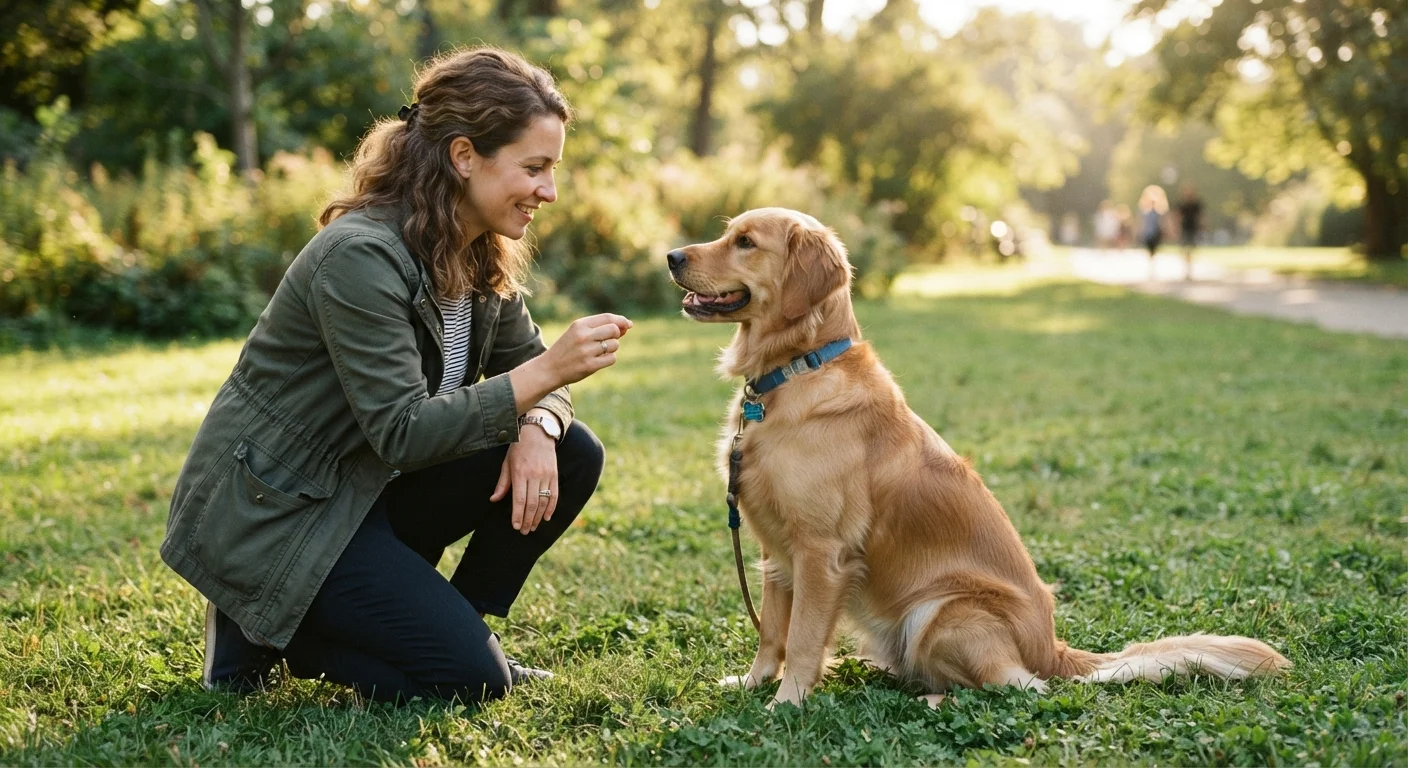
Why Body Language Matters in Training
Every training session is a two-way conversation. While you're teaching your pet what you want, your pet is constantly telling you how they feel about the process. The problem is that most of that communication happens through body posture, facial expressions, and subtle physical signals — not sounds.
Learning to read these cues isn't just a nice skill to have; it directly affects how well training goes. A pet that's stressed, confused, or overwhelmed isn't in a good mental state to learn. Continuing to push through those signals can slow your progress, damage trust, and in some cases create new behavioral problems.
This guide focuses on dogs and cats, the most common household pets. Many of the principles apply broadly, but always consider species-specific behavior when interpreting signals. For a fuller picture of how positive training methods work, see our article on positive reinforcement in pet training.
| Primary communication mode | Body language and posture (American Veterinary Society of Animal Behavior) |
| Ideal training session length | 5–10 minutes per session (General veterinary behaviorist consensus) |
| Calming signals documented in dogs | Over 30 distinct signals (Rugaas, Turid — On Talking Terms with Dogs) |
| Species covered in this guide | Dogs and cats (primary) |
| Key stress indicator to stop sessions | Persistent calming signals or shutdown behavior |
Common Signals and What They Mean
Body language signals exist on a spectrum from relaxed and engaged to stressed and overwhelmed. Here's what to watch for:
Signs Your Pet Is Ready to Learn
- Soft, relaxed posture: No tension in the body; weight distributed evenly.
- Loose, wagging tail (dogs): A mid-height wag often signals enthusiasm and ease.
- Forward, attentive ears: Interest without rigidity.
- Soft eyes: No hard stare, no wide whites visible.
- Gentle, slow blinking (cats): A well-documented sign of calm and comfort.
Signs Your Pet Is Confused or Uncertain
- Head tilting: Often signals the pet is processing but unsure what's expected.
- Pawing at the ground or handler: Can indicate frustration or a request for guidance.
- Repeated offering of known behaviors: The pet tries everything they know hoping to find the right answer.
Signs Your Pet Is Stressed or Overwhelmed
- Yawning, lip licking, or nose licking (dogs): These are called calming signals — the dog is trying to reduce its own stress or communicate discomfort.
- Whale eye: When you can see the whites of a dog's eyes in a half-moon shape, it's a strong stress indicator.
- Tail tucked or low: Anxiety or submission; the pet is not comfortable.
- Panting without physical exertion: A common stress response in dogs.
- Crouching or flattening (cats): The cat is trying to make itself small — a clear sign of fear.
- Piloerection (raised fur along the back): Seen in both dogs and cats; indicates high arousal or threat response.
Calming Signals
Behaviors dogs use to reduce stress in themselves or others, including yawning, lip licking, and looking away. Turid Rugaas, a Norwegian dog trainer, popularized this term through her research on canine communication.
Piloerection
The involuntary raising of fur along an animal's back and neck. It signals high emotional arousal — which may be excitement, fear, or threat response — and is not always a sign of aggression.
Whale Eye
A stress signal in dogs where the whites of the eye (sclera) are visible in a crescent shape. It typically appears when a dog is uncomfortable with something in its immediate environment.
Threshold
The point at which a pet becomes too stressed or aroused to learn effectively. Working 'over threshold' means the pet is too reactive to take in new information; effective training keeps pets 'under threshold.'
Operant Conditioning
A learning process where behavior is shaped by its consequences. In pet training, this underpins methods like positive reinforcement, where desired behaviors are rewarded to make them more likely to repeat.
If your pet regularly shows pain-related signals during sessions — such as reluctance to sit, flinching, or sudden behavioral changes — that's worth a veterinary conversation. Our guide on signs your pet may be in pain covers what vets look for.
How to Respond to What You Observe
Recognizing a signal is only half the job. Knowing how to respond is what actually improves your sessions.
When your pet looks engaged and relaxed:
Keep going. This is the ideal training state. Keep sessions short (5–10 minutes for most pets) so they end on a positive note before fatigue sets in.
When your pet looks confused:
Simplify. Break the behavior into a smaller step, or go back to something your pet already knows to rebuild confidence. Avoid repeating the same cue louder or more emphatically — it rarely helps and can increase frustration.
When your pet shows stress signals:
Stop or significantly reduce demands. Give your pet a moment to decompress. Consider whether the environment is too distracting, the session has gone too long, or the task is too difficult for where your pet currently is in training. Forcing through stress signs is one of the most common mistakes families make — and one of the myths debunked in our article on pet training myths that may be slowing your progress.
Context Changes Signal Meaning
No single signal should be read in isolation. A yawn right after waking up is just a yawn. A yawn during a training drill, paired with lip licking and a tucked tail, is a stress cluster worth taking seriously. Always consider the full picture — posture, environment, and what happened immediately before.
If children are participating in training sessions, they also need to learn how to read these signals. Visit our guide on teaching children to participate in pet training safely for age-appropriate guidance.
Before your first formal session, check the pet training readiness checklist to set up the right conditions from the start.
This article is for general informational and educational purposes. If your pet shows sudden or significant behavioral changes, consult a qualified veterinarian or certified animal behaviorist.